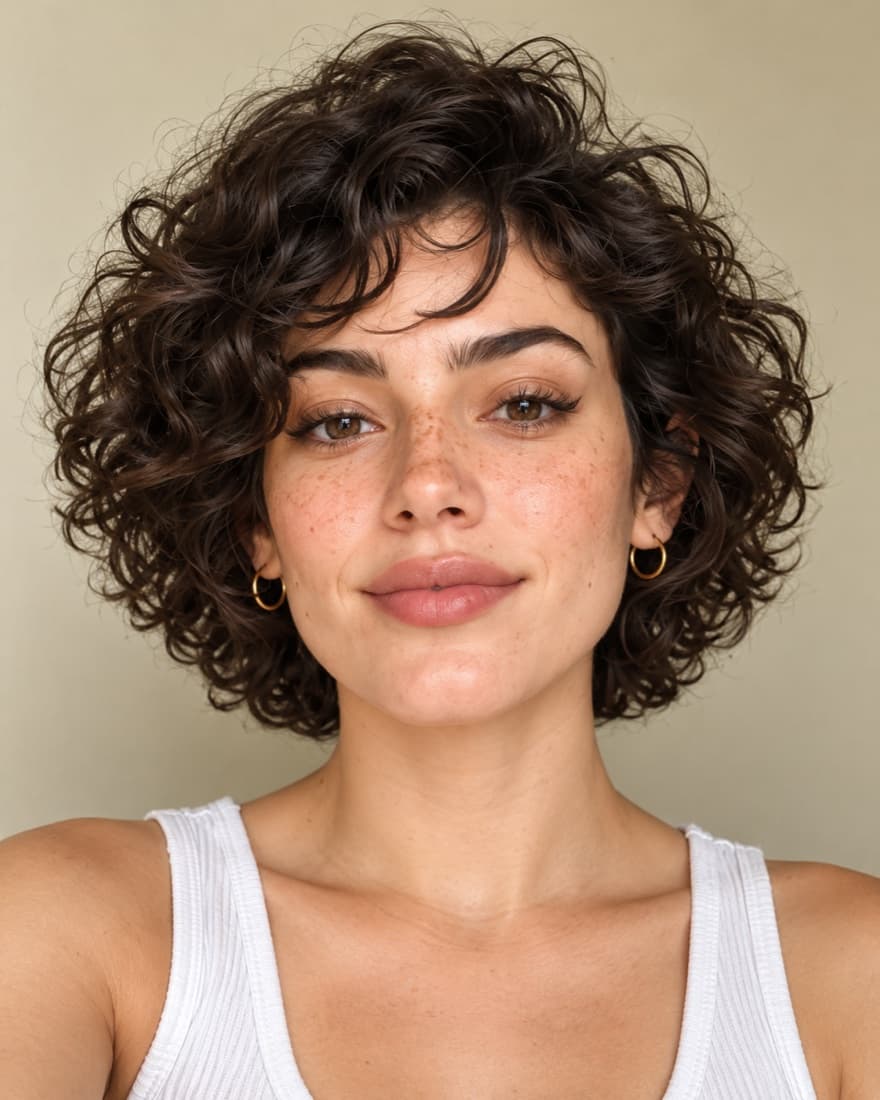
What is a facial thirds test?
A facial thirds test checks the classical rule that a face divides into three roughly equal heights: hairline to brow, brow to the base of the nose, and base of the nose to the chin. FaceTwin measures the two lower thirds from 68 landmarks on your selfie and reports middle ÷ lower: within ±6% of 1 counts as even, above 1.06 as a longer middle third and below 0.94 as a longer lower third. It also measures the lower-face split, upper lip ÷ lips-to-chin, against the classical 1:2 ideal of 0.5. The upper third is not measured, because the landmark model has no hairline. In our reference set of 1,196 faces the median middle ÷ lower is 1.12 and 68.6% read as a longer middle third, so a longer middle third is the norm in this measurement, not a flaw.
- Even = middle ÷ lower within ±6%
- Reference median 1.12; 24.1% even
- Lip ÷ chin median 0.486 vs ideal 0.5
- Upper third (hairline) not measured
Related proportion tests
The rule of facial thirds
Artists and anatomy teachers have long divided the face into three horizontal bands. The upper third runs from the hairline to the brow, the middle third from the brow to the base of the nose, and the lower third from the base of the nose to the bottom of the chin. In the idealized drawing the three are equal, which is a quick way to place features when sketching a face from scratch.
Real faces rarely follow the drawing exactly, and they don’t need to. The rule is useful as a reference line: it tells you which part of your face takes up more vertical space, and that is something a haircut, a beard or a pair of glasses can work with.
What this test measures — and what it can’t
The thirds tab draws the measured lines on your photo and reports two ratios:
| Measurement | From → to | Classical ideal | Measured? |
|---|---|---|---|
| Upper third | Hairline → brow line | Equal to the others | No — the 68-point model has no hairline |
| Middle third | Brow line → base of nose | Equal to the lower third | Yes |
| Lower third | Base of nose → chin | Equal to the middle third | Yes |
| Lower-face split | Upper lip (nose base → lips) ÷ lips → chin | 1 : 2, or 0.5 | Yes |
The hairline is the honest gap. Face landmark models trace the eyes, brows, nose, lips and jaw, but not where your hair starts — and hairlines move with age, styling and fringes anyway. So any tool that gives you a confident upper-third number from a selfie is guessing. We prefer to measure the two thirds we can see and say so.
Reference values from 1,196 faces
We ran the test on 1,196 frontal photos of public figures (540 women, 646 men). Bands use a ±6% tolerance around an even 1:1 split of the middle and lower thirds.
| Result | Middle ÷ lower | Share of reference faces |
|---|---|---|
| Longer middle third | above 1.06 | 68.6% (women 74.1%, men 64.1%) |
| Even thirds | 0.94 – 1.06 | 24.1% |
| Longer lower third | below 0.94 | 7.3% |
The median middle ÷ lower ratio is 1.12, with the bottom tenth at 0.964 and the top tenth at 1.304. For the lower-face split the median upper lip ÷ lips-to-chin is 0.486 (p10 0.406, p90 0.587), remarkably close to the classical 0.5. In other words, the 1:2 rule for the lower face holds up well in real faces; the equal-thirds rule for the middle and lower face is looser.
Why most faces measure a longer middle third
Two things are probably at work. First, the brow landmarks follow the eyebrow hairs, which sit a little above the point anatomy charts usually use for the top of the middle third, so the measured middle third comes out slightly longer. Second, many portraits are taken from at or slightly above eye level, which makes the chin and lower face look a little shorter. That is why we compare you with real reference faces rather than with a perfect 1.0.
What a longer middle or lower third looks like — and styling ideas
Neither result is better or worse. They simply describe where the vertical length of your face sits, and they can be useful when choosing a look.
Longer middle third
The nose and cheek area takes up more height than the mouth and chin area. It is the most common result and often reads as mature or elegant.
- Glasses with a slightly deeper frame or a stronger top line sit across the middle third and visually shorten it.
- Soft volume at the sides of the face draws the eye outward rather than down the center.
- A fuller beard or stubble along the chin can add a little visual weight to the lower third.
Longer lower third
The mouth and chin area takes up more height. Often it comes with a strong, defined chin.
- A fringe or curtain bangs shorten the upper face and can make the whole face feel more compact; volume at the crown does the opposite.
- A shorter, well-trimmed beard keeps the chin from looking longer; a beard that is fuller at the sides than at the chin widens rather than lengthens.
- Hairstyles with width around the cheekbones balance length in the lower face.
Even thirds
Your middle and lower face are within 6% of each other. Almost any hairstyle or frame keeps that balance; choose by face shape and personal style instead.
Photo tips for an accurate thirds measurement
Thirds are vertical measurements, so the biggest source of error is the height of the camera and the tilt of your head — much more than for symmetry.
- Hold the camera at eye level. A camera above you shortens the chin and lower third; a camera below you lengthens it.
- Keep your chin level: imagine a line from your ear to the corner of your eye staying horizontal. Tucking or lifting the chin changes the lower third immediately.
- Close your mouth in a relaxed position. An open mouth or a big smile stretches the lower third and moves the lip landmarks.
- Move your hair off your brows so the brow line is visible, and take off thick-framed glasses.
- Stand about an arm’s length away or further. Very close selfies distort the nose and chin.
- Take two or three photos and compare. If they agree within a few hundredths, you have a reliable reading.
Frequently asked questions
What are facial thirds?
The classical division of the face into three heights: hairline to brow, brow to nose base, and nose base to chin. In the idealized version they are equal.
How do I do a facial thirds test?
Upload a front-facing selfie taken at eye level. FaceTwin measures your middle and lower thirds and the lip-to-chin split, draws the lines on your photo and compares them with 1,196 reference faces.
Why doesn’t the facial thirds calculator measure my forehead?
The landmark model has 68 points on the eyes, brows, nose, lips and jaw, but none on the hairline. Rather than guess the upper third, we measure only the two thirds we can see.
Is a longer middle third bad?
No. In our reference set of 1,196 faces, 68.6% read as a longer middle third. It is the most common result and simply describes where the face’s length sits.
What is the 1:2 rule for the lower face?
The distance from the nose base to the lips is classically half the distance from the lips to the chin. Our reference faces have a median of 0.486, very close to the ideal 0.5.
Is my photo uploaded?
Not for local lookalikes or face analysis: the model runs in your browser, so your selfie, landmarks and descriptor stay on your device. AI portraits, including the first free one, and full reports send your photo through our server to the AI provider after sign-in and separate upload consent. Reports also send your numeric measurements. FaceTwin does not save the original photo; it is discarded from request memory after processing.
Why did my facial thirds result change between photos?
Camera height and chin tilt change vertical distances directly. Shoot at eye level with a level chin and a closed, relaxed mouth for repeatable results.
More from the same selfie
Last updated 2026-10-08. FaceTwin is for entertainment and is not identity recognition, medical or cosmetic advice.