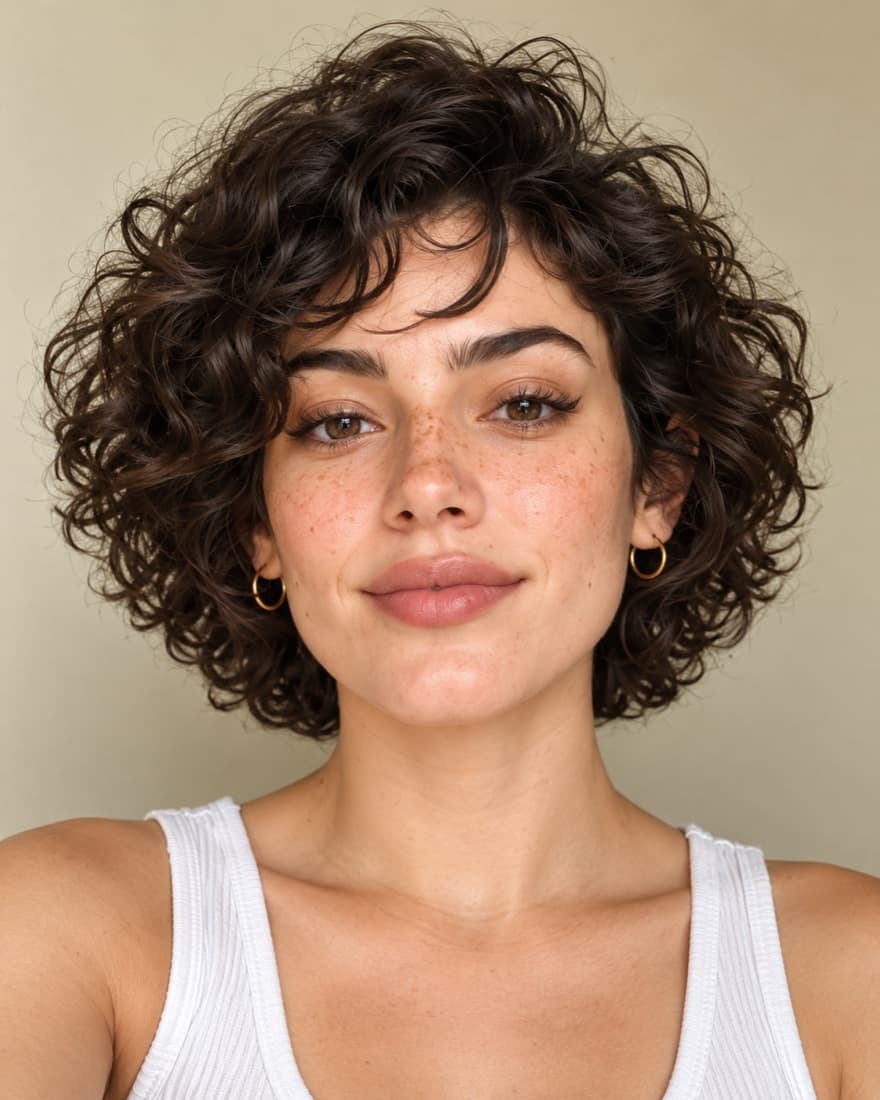
What does the FaceTwin face rater rate?
The FaceTwin face rater rates your face feature by feature rather than with a single mystery number. From one front-facing selfie it measures symmetry across 26 mirrored landmark pairs, two golden-ratio proportions, the balance of your facial thirds, the tilt of your eyes in degrees and the angle of your jaw, then combines them into a 1–10 rating with a percentile. You can switch on an overlay that draws every measured point on your own photo. For reference, the median face length-to-width ratio among 1,196 public figures we measured is 1.45 — about 10% short of the golden ratio of 1.618 — which is why almost nobody scores 100% on golden ratio. The rating runs entirely in your browser and is free.
- Five measured ratings + face shape
- Landmark overlay shows what was measured
- Median face length/width 1.45 vs golden 1.618
- Runs on your device
A face rating you can check
Most face raters return a single number from a black-box model. FaceTwin shows its working. After you upload a selfie, switch on “Show landmarks” to see the 68 points we measured, the midline used for symmetry, the three horizontal guides for facial thirds and the yellow canthal-tilt lines across your eyes. Every rating below the score maps to something you can see on the image.
- Upload a clear, front-facing selfie (18+, your own photo).
- Get your overall face rating from 1 to 10 and your percentile against our reference faces.
- Read the six cards: face shape, symmetry, golden ratio, facial thirds, canthal tilt and jaw angle.
- Share the rating card, or unlock a full report with styling suggestions for your face.
What a good face rating looks like
| Rating | What it means on our scale |
|---|---|
| 8.5 and above | Very balanced proportions — roughly the top 5% of reference faces |
| 7.5–8.4 | More balanced than most; strong in several measurements |
| 6.0–7.4 | Typical — the range most faces fall into |
| Below 6.0 | Distinctive proportions that depart from textbook ratios |
Distinctive is not a polite word for unattractive. Plenty of memorable faces have strong noses, wide-set eyes or a long lower third — features that lower a geometric score and raise character. Use the rating to understand your proportions, then decide what, if anything, you want to emphasise.
The five ratings behind your score
Symmetry (30%)
We mirror 26 landmark pairs — eyes, brows, nostrils, mouth corners and the jaw outline — across your midline and measure how far each pair is from its mirror image, relative to the distance between your eyes.
Golden ratio (20%)
Two classical checks against 1.618: estimated face length to cheekbone width, and nose-to-chin compared with lips-to-chin.
Facial thirds (20%)
The brow-to-nose and nose-to-chin heights. The top third depends on your hairline, which a 68-point model cannot see, so we compare the two lower thirds.
Canthal tilt (15%)
The angle of each eye from its inner to its outer corner, after levelling your head. Positive tilt scores higher, as studies of rated faces suggest, but neutral is the most common.
Jaw angle (15%)
The gonial angle at both corners of the jaw. A defined angle around 140° scores best; very soft or very sharp angles score a little lower.
How to rate your face fairly
The biggest swings in any face rater come from the camera, not the face. A selfie at 30 cm exaggerates the centre of the face; a slight head tilt changes the thirds; a big smile changes the jaw. For a fair rating hold the phone at eye level, as far away as you can, look straight at the lens with a relaxed expression and use soft frontal light. Then rate two or three photos — your real rating is the range, not the single best or worst number.
Rate my face privately
Rating your face should not mean handing a stranger’s server a high-resolution photo of you. FaceTwin’s face rater runs entirely in your browser: the model files load from our site, the analysis happens on your device and the photo is gone when you close the tab. We do not log your score, your landmarks or anything derived from your face, and our analytics never record result values.
If you want more than the rating, the full report (30 credits) explains each measurement for your face and adds hairstyles, glasses and colours that suit you. Creating it uploads your photo once with your separate consent, and the photo is deleted immediately after.
Frequently asked questions
How do I rate my face?
Upload a front-facing selfie above. The face rater measures five proportions plus your face shape and gives you a 1–10 rating with a percentile, all on your device.
Is this face rater free?
Yes. The rating, the six insights and the share card are free and need no account.
Is my photo uploaded?
Not for the free results. The face model runs inside your browser, so your selfie, its landmarks and its face descriptor never leave your device. Only if you choose a paid portrait or report do we upload the photo once, after a separate consent, and delete it right after generation.
What is the difference between the face rater and the attractiveness test?
They use the same on-device measurements. The face rater focuses on the feature-by-feature rating and landmark overlay; the attractiveness test explains how the proportions relate to perceived attractiveness.
Why is my face rated lower than I expected?
Geometric ratings reward textbook proportions and penalise distinctive ones. Camera distance and expression also matter — try a photo from further away with a neutral expression.
Does the rating include skin, hair or eyes colour?
No. It only uses the geometry of 68 landmarks. Colouring is covered by the palette suggestions in the full report.
More from the same selfie
Last updated 2026-10-04. FaceTwin is for entertainment and is not identity recognition, medical or cosmetic advice.