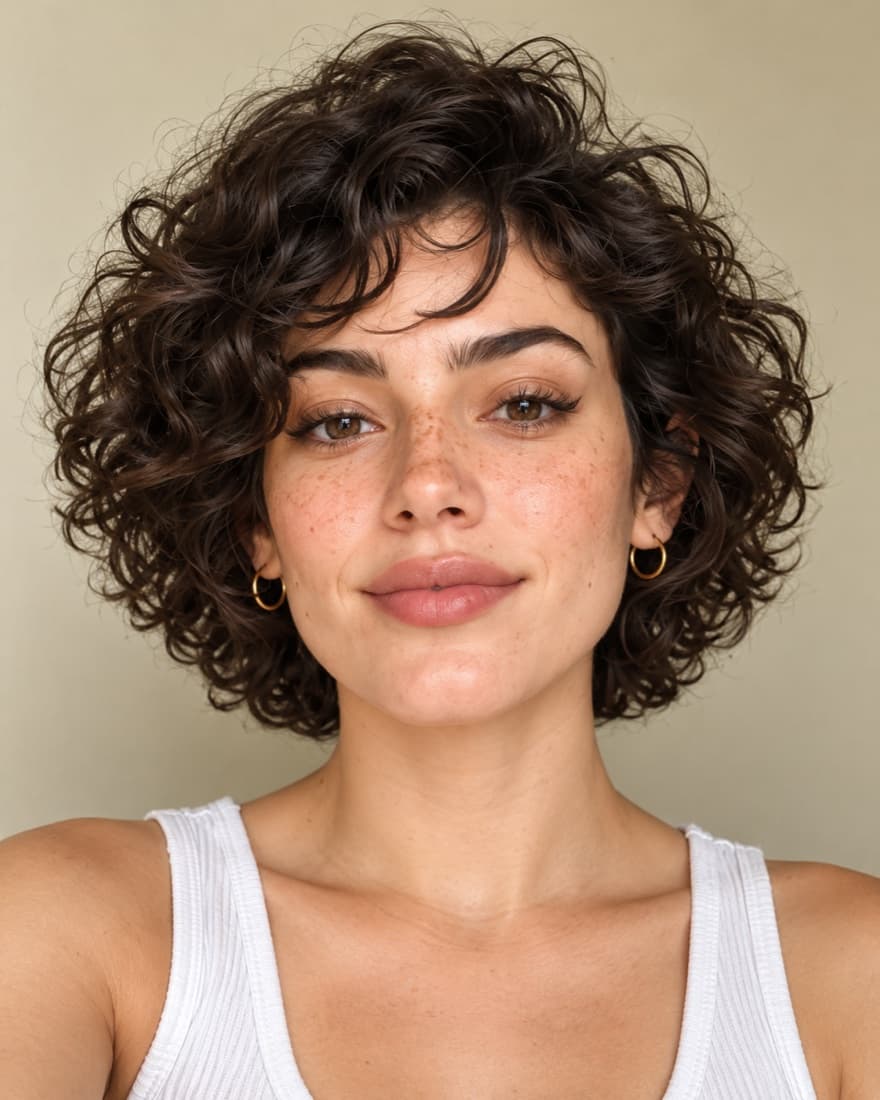
How do I find my PSL score?
Upload one clear, front-facing selfie above. FaceTwin places 68 landmarks on your face inside your browser, measures symmetry, golden-ratio proportions, facial thirds, canthal tilt and jaw angle, and combines them into a 1–10 proportions score. That score is then converted to an estimated PSL-equivalent on the 1–8 scale in half steps: the median of our 1,196 reference faces, a 7.2, maps to PSL 4; 7.7 maps to 4.5; 8.1 maps to 5; and a score of 6.0 or lower maps to 3 or below. In our reference set of 1,196 faces of public figures, 30.9% land on 4 and nobody reaches 6. The result is a geometric estimate for curiosity, not a forum rating: it cannot see skin, hair, style or expression, and it says nothing about your worth.
- Reference median 7.2 → PSL 4
- 30.9% of 1,196 faces estimate at 4
- No reference face estimates at 6+
- Computed on your device
PSL guides
How your PSL score is calculated
The PSL scale was invented as a rating that people give each other, so there is no official formula for it. What we can do honestly is measure your face and translate that measurement into the PSL vocabulary. The calculation has three steps, all of which run on your own phone or laptop.
- Landmarks: a face model places 68 points on your eyes, brows, nose, lips and jaw contour.
- Proportions score: five measurements become 0–100 sub-scores and are combined with fixed weights — symmetry 30%, golden ratio 20%, facial thirds 20%, canthal tilt 15% and jaw angle 15% — into a 1–10 score.
- Conversion: the 1–10 score is mapped onto the 1–8 PSL scale in half steps using the table below, and given a plain-words label.
| Proportions score (1–10) | Estimated PSL | In plain words |
|---|---|---|
| 6.0 or lower | 3 or below | Below most reference faces |
| 7.2 (reference median) | 4 | The middle of the curve |
| 7.7 | 4.5 | Upper middle |
| 8.1 | 5 | Clearly above the reference median |
| 8.75 | 5.75 | Very rare in our data |
| 9.2 | about 6 | Not reached by any reference face |
Scores between the anchor points are interpolated and shown in half steps. The conversion is a novelty and is the same one shown on our PSL scale chart page, so the two pages always agree.
How PSL estimates are distributed in our reference set
To give the numbers a meaning, we ran exactly the same code on 1,196 frontal photos of public figures — actors, musicians, athletes and others, 540 women and 646 men. These are people who are photographed professionally and are often considered good-looking, so the set is a demanding reference, not a random sample of the population.
| Estimated PSL | Share of 1,196 reference faces |
|---|---|
| 3 or below | 9.2% |
| 3.5 | 24.3% |
| 4 | 30.9% |
| 4.5 | 21.4% |
| 5 | 13.1% |
| 5.5 | 1.1% |
| 6 or above | 0% |
Three quarters of these faces sit between 3.5 and 4.5. That is the most useful thing to know before you look at your own result: a 4 is not a bad grade, it is where most famous faces land when only geometry is counted. A 5 is uncommon, a 5.5 is rare, and no face in the set reached 6.
What a half step means
Forum ratings move in half steps because raters want to say “a bit better than a 4” without committing to a 5. Our estimate uses half steps for the same reason, but they come from a measured gap: moving from 4 to 4.5 corresponds to roughly half a point on the 1–10 proportions score, from the reference median of 7.2 to 7.7.
That gap is small. A slightly different head angle, a change in lighting or a different expression can move the underlying score by that much. So treat a half step as noise unless you see it consistently across several photos. If three selfies give you 4, 4.5 and 4, the honest summary is “around 4”, not “a 4.5 on a good day”.
What moves your PSL score (and what doesn’t)
Because the estimate is built from landmark positions, anything that shifts landmarks shifts the number. Most of that is about the photo, not your face:
- Head turn: even a small rotation makes one side of the face look narrower and lowers symmetry, which carries 30% of the score.
- Head tilt up or down: changes the apparent length of the middle and lower face, which feeds the thirds and golden-ratio parts.
- Lens distance: a phone held close to the face enlarges the nose and narrows the jaw; stepping back and zooming slightly gives truer proportions.
- Expression: a wide smile pulls the mouth corners and cheeks and changes the jaw contour; a relaxed, closed-mouth face is the most repeatable.
- Hair and glasses: hair covering the brows or jaw edge and thick frames can push landmarks off their real positions.
Things that do not move the number at all: skin tone, makeup colors, hair color, clothing or background. The model only sees geometry, which is also why the estimate can’t reflect many things people actually respond to.
Why this is an estimate, not a forum rating
A PSL rating on a forum is somebody’s opinion of a photo, filtered through that community’s tastes. Our number is a measurement of proportions translated onto the same scale. The two can disagree, and neither is the truth about you.
The estimate has clear advantages: the same photo always gives the same result, every input is shown with an explanation, and nobody else sees your face. It also has clear limits: it ignores skin, hair, eyes, style, voice, expression and presence. If you want to understand what the scale itself claims, read the PSL scale chart; if you want the vocabulary around it, the PSL meaning glossary explains it neutrally.
Keep the number in perspective
A PSL score is a compressed, deliberately harsh scale that came out of communities that can be unkind about ordinary faces. A geometric estimate is a fun way to see your proportions in that vocabulary — it is not a measure of your attractiveness to the people in your life, and it is certainly not a measure of your worth.
If the number is making you anxious rather than curious, close the tab. If worries about how you look take up a lot of your day, talking to a doctor or counselor about it is a sensible, strong step. Any cosmetic procedure is a medical decision for a qualified professional and never something a selfie score should push you toward.
Frequently asked questions
What is my PSL score?
Upload a front-facing selfie above. FaceTwin measures your proportions and converts the result to an estimated PSL on the 1–8 scale in half steps, with the six insights that drove it.
Is this a free PSL rating?
Yes. The estimated PSL, the 1–10 proportions score and all six insights are free, with no account and no upload.
What is a good PSL score?
On the PSL scale 4 is described as average. In our reference set of 1,196 public figures, 30.9% estimate at 4, 13.1% at 5 and only 1.1% at 5.5.
How is an AI PSL rating different from a forum rating?
A forum rating is people’s opinion of a photo. Our estimate is measured geometry converted to the PSL scale, so it is repeatable and explained, but it cannot see skin, hair, style or expression.
Why did my PSL change between photos?
Head angle, lens distance, lighting and expression all move the landmarks. A half step is within normal photo-to-photo variation, so average several photos.
Is my photo uploaded?
Not for local lookalikes or face analysis: the model runs in your browser, so your selfie, landmarks and descriptor stay on your device. AI portraits, including the first free one, and full reports send your photo through our server to the AI provider after sign-in and separate upload consent. Reports also send your numeric measurements. FaceTwin does not save the original photo; it is discarded from request memory after processing.
Can I check someone else’s PSL score?
No. FaceTwin is for adults analyzing their own photo. Please don’t upload or rate other people.
More from the same selfie
Last updated 2026-10-08. FaceTwin is for entertainment and is not identity recognition, medical or cosmetic advice.