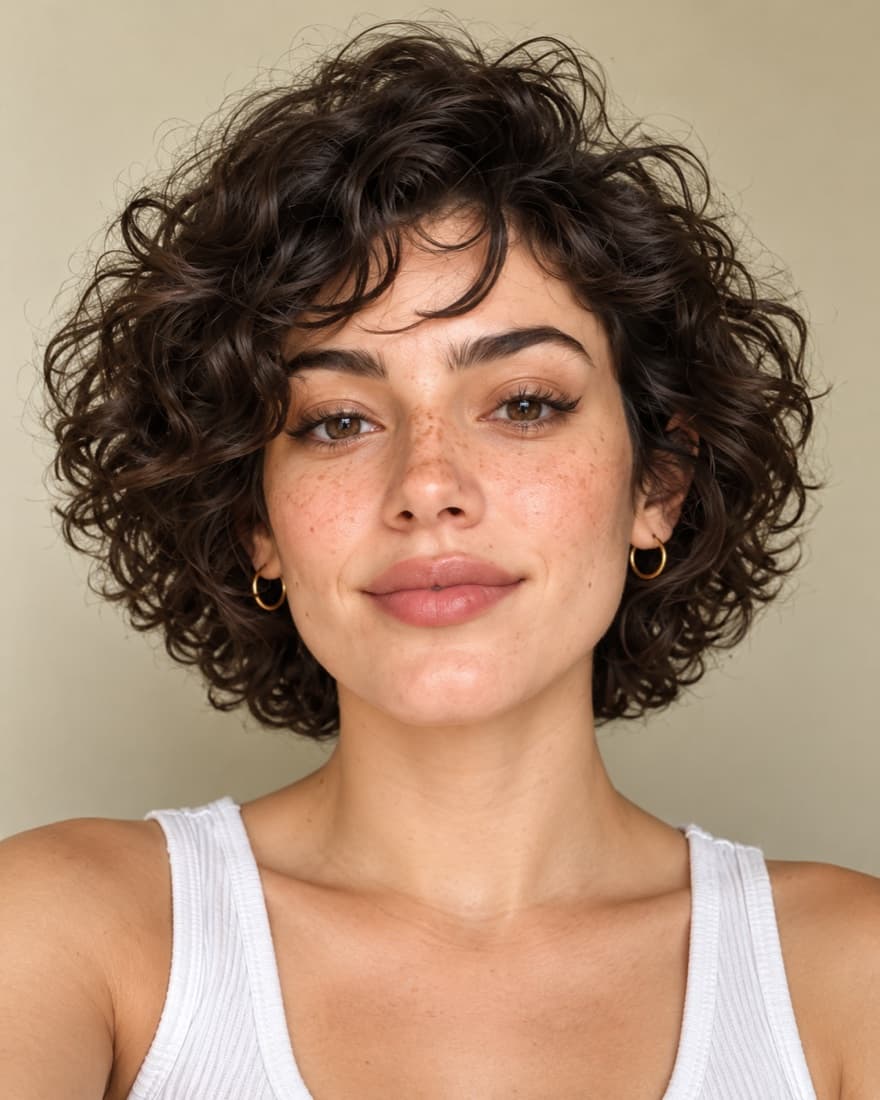
What is canthal tilt and what is normal?
Canthal tilt is the angle of the line from the inner corner of the eye (medial canthus) to the outer corner (lateral canthus), compared with horizontal. If the outer corner sits higher, the tilt is positive; level is neutral; lower is negative. FaceTwin measures it from four eye-corner landmarks on your selfie and averages both eyes. In our reference set of 1,196 frontal photos of public figures, 70% have a neutral tilt, 20.5% positive and 9.4% negative, with a median of +3.5°. Women in the set more often have a positive tilt (27.8%) than men (14.6%). Head roll, camera height, smiling and eye makeup all move the number by a few degrees, so measure two or three neutral photos. Canthal tilt is one small part of a face — it is not a beauty grade.
- Median tilt +3.5° across 1,196 faces
- 70% neutral · 20.5% positive · 9.4% negative
- Positive tilt: 27.8% of women, 14.6% of men
- Free, private, no sign-up
How the canthal tilt test works
A face model running in your browser places 68 landmarks on your selfie. Four of them mark the corners of your eyes: the inner and outer corner of each eye. For each eye we draw a line from the inner to the outer corner and measure its angle against the horizontal, in degrees. A positive angle means the outer corner is higher than the inner one. We then average the two eyes, because most people have a slightly different tilt on each side.
Before measuring, FaceTwin checks that your head is not rolled or turned too far — a tilted head would add its own angle to both eyes. If the photo is not frontal enough you will be asked for another one, rather than being given a misleading number.
| Result | FaceTwin threshold | Share of 1,196 faces |
|---|---|---|
| Positive (outer corners higher) | +5° or more | 20.5% |
| Neutral | +1° to +5° | 70.2% |
| Negative (outer corners lower) | below +1° | 9.4% |
Why are our thresholds a little higher than the “above 0° is positive” rule you see online? The landmark model marks eye corners on the visible skin fold, which reads a few degrees more upturned than a clinical measurement on the bony canthus. We calibrated the bands on our own reference set so that “neutral” means what is actually typical, instead of labelling almost everyone positive.
Canthal tilt statistics from 1,196 measured faces
We measured frontal, openly licensed photos of 1,196 public figures (540 women, 646 men) with exactly the same code your selfie goes through. The full method is on our face shape statistics page; the tilt results are:
| Group | Positive | Neutral | Negative | Median tilt |
|---|---|---|---|---|
| All | 20.5% | 70.2% | 9.4% | +3.5° |
| Women | 27.8% | 66.9% | 5.4% | +4.0° |
| Men | 14.6% | 72.9% | 12.5% | +3.0° |
Two things stand out. First, a neutral tilt is by far the most common, even among actors, musicians and athletes who are photographed for a living — a neutral tilt is completely ordinary in attractive faces. Second, the difference between men and women is real but modest: about one degree at the median. Public figures are not a random sample of the population, so read these as a reference point rather than a census.
Positive, neutral and negative canthal tilt explained
None of the three is “correct”. Each one changes the impression a face gives, and plenty of well-known faces sit in every group.
Positive canthal tilt
The outer corners sit higher than the inner corners. It tends to read as alert or cat-like, and it is the look winged eyeliner imitates. In online communities it is often linked to “hunter eyes”, although that term also describes deep-set eyes and a low brow, which tilt alone does not capture.
Neutral canthal tilt
The eye line is close to level or very slightly upturned. This is the most common result by a wide margin and reads as balanced. Brows, lashes and expression shape the overall look far more than one or two degrees here.
Negative canthal tilt
The outer corners sit lower than the inner corners. It often reads as soft, gentle or friendly, and it becomes a little more common with age as the outer eye area relaxes. Many actors known for warm, approachable faces have a slightly negative tilt.
Why your canthal tilt changes between photos
Canthal tilt is a small angle, so small changes in the photo move it. In our tests the same person can read two to four degrees apart across selfies. The usual causes:
- Head roll: tilting your head a few degrees adds that angle to one eye and subtracts it from the other. Averaging both eyes cancels most of it, but not all.
- Camera height: shooting from below makes outer corners look lower; from above, higher. Hold the phone at eye level.
- Expression: smiling lifts the cheeks and the outer corners, so a smiling photo reads more positive. Use a relaxed, neutral face.
- Makeup and lashes: eyeliner and lash direction change where the visible corner appears.
- Lens distance: very close selfies distort the face. Hold the phone at arm’s length or further and crop.
For a fair reading, take three neutral, eye-level photos in soft frontal light and look at the range.
Can you change your canthal tilt?
Your bony eye structure does not change, but how your tilt looks in photos and in person does. Brow shape has the biggest effect: a brow that lifts towards the tail draws the eye line upward. Eyeliner that extends slightly up and out, curled lashes and concealer at the outer corner do the same. Good sleep and less puffiness help more than most people expect. Camera height and a tiny chin-down angle matter in photos.
Surgical procedures such as canthoplasty exist, but they carry real risks and are a medical decision for a qualified surgeon, not something to plan from a selfie test. FaceTwin is entertainment and does not give medical or cosmetic advice.
Canthal tilt in the full face analysis
Your tilt is one of six insights in the free FaceTwin analysis, next to symmetry, golden-ratio proportions, facial thirds, jaw angle and face shape. In the 1–10 proportions score it carries 15% of the weight. That is deliberate: tilt is easy to measure and popular online, but it is a small detail of a face, and it is the measurement most affected by expression and makeup.
Your selfie, the landmarks and every number are computed in your browser — nothing is uploaded and no account is needed.
Frequently asked questions
How do I measure my canthal tilt?
Upload a front-facing selfie above. FaceTwin finds the inner and outer corner of each eye, measures the angle of the line between them against horizontal, averages both eyes and labels the result positive, neutral or negative.
What is a normal canthal tilt?
In our set of 1,196 frontal faces the median is +3.5° and 70% are neutral. A slightly upturned or level eye line is the most common result.
Is a positive canthal tilt more attractive?
Studies and surveys link a slightly positive tilt with youthful or alert impressions, but attractiveness depends on the whole face, expression and style. Plenty of very attractive people have a neutral or negative tilt.
Is negative canthal tilt bad?
No. It is a normal variation found in about one in ten faces in our data, and it often reads as soft and friendly. It becomes slightly more common with age.
Why does my canthal tilt look different in each photo?
Head roll, camera height, smiling, lens distance and eye makeup all change the measured angle by a few degrees. Use a neutral, eye-level photo and compare a few.
Is my photo uploaded?
Not for the free results. The face model runs inside your browser, so your selfie, its landmarks and its face descriptor never leave your device. Only if you choose a paid portrait or report do we upload the photo once, after a separate consent, and delete it right after generation.
What is the difference between canthal tilt and hunter eyes?
Canthal tilt is only the angle of the eye line. “Hunter eyes” is an online term for deep-set eyes with a low, straight brow and little visible upper eyelid, usually with a neutral-to-positive tilt.
Is the canthal tilt test free?
Yes. The measurement, the landmark overlay and the full six-insight analysis are free with no account.
More from the same selfie
Last updated 2026-10-07. FaceTwin is for entertainment and is not identity recognition, medical or cosmetic advice.