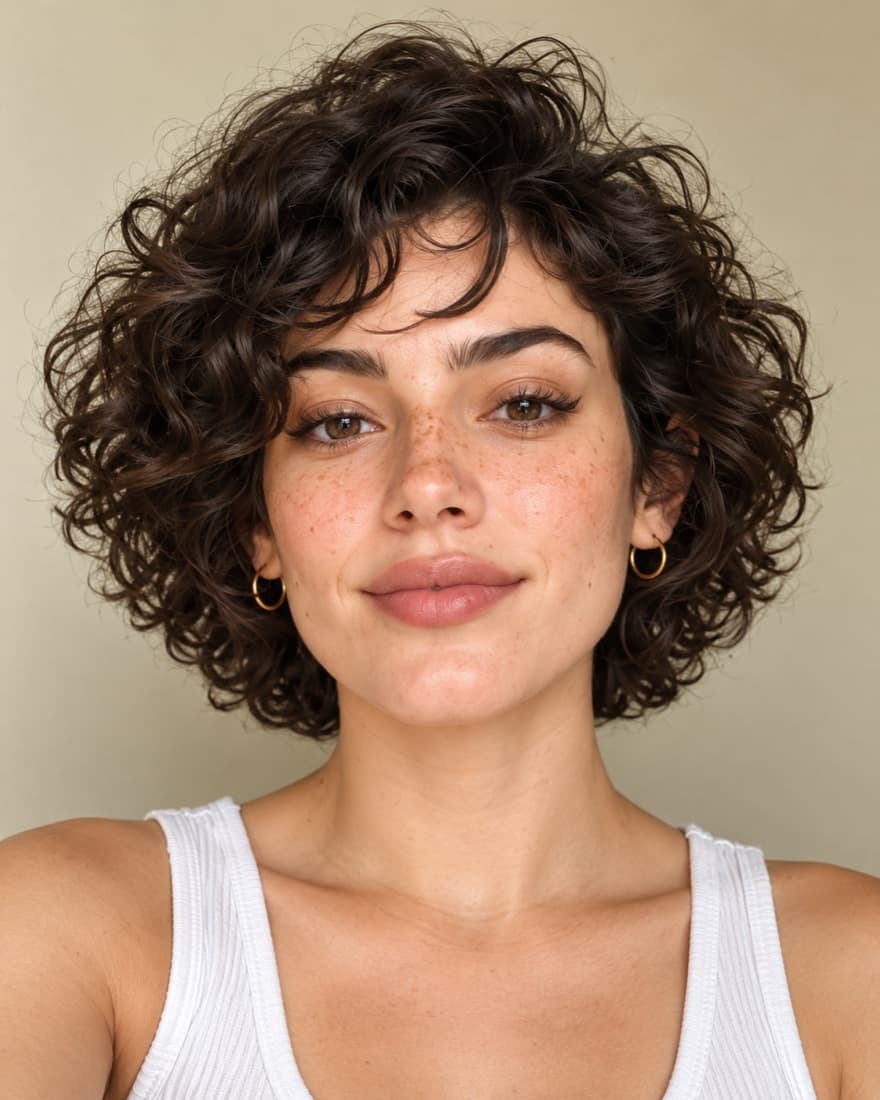
How does the FaceTwin attractiveness test score you?
The FaceTwin attractiveness test places 68 landmarks on your selfie and measures five proportions linked to how faces are rated on average: symmetry (30% of the score), golden-ratio proportions (20%), facial thirds (20%), canthal tilt (15%) and jaw angle (15%), plus your face shape. The weighted result becomes a 1–10 proportions score and a percentile. In our reference set of 1,196 frontal photos of public figures, the median score is 7.2, the middle 80% fall between 6.4 and 8.0, the median symmetry is 79% and only 17% reach 90% or more — so a 7 is a genuinely typical, well-balanced face. Everything is computed in your browser, every number is explained, and no account is needed. The score describes geometry, not your worth.
- Median score 7.2 across 1,196 public figures
- Only 17% have symmetry of 90% or higher
- Six measured insights, each explained
- Free, private, no sign-up
What this attractiveness test actually measures
Attractiveness is personal, cultural and mostly about expression, style and confidence — none of which a photo test can see. What a camera can measure is facial geometry: proportions that researchers have linked, on average, to how faces are rated. FaceTwin measures six of them from 68 landmarks placed on your selfie, shows you exactly where they are on your photo, and combines them into a single proportions score from 1 to 10.
| Insight | How we measure it | Weight |
|---|---|---|
| Symmetry | 26 left/right landmark pairs mirrored across your facial midline | 30% |
| Golden ratio | Face length to width, and nose-to-chin vs lips-to-chin, compared with 1.618 | 20% |
| Facial thirds | Brow-to-nose height vs nose-to-chin height | 20% |
| Canthal tilt | Angle from the inner to the outer corner of each eye | 15% |
| Jaw angle | Average angle at the corners of the jaw | 15% |
| Face shape | Length-to-width and jaw-to-cheekbone ratios (oval, round, square, heart, oblong, diamond) | Descriptive |
How the 1–10 score and percentile are calculated
Each measurement becomes a 0–100 sub-score, then the weighted sub-scores form a composite. To turn that into something meaningful we measured the same composite on about 1,700 frontal photos of public figures and use that spread as the reference: a typical face lands around 6.9, and the scale gently stretches from there. The percentile tells you where your composite sits within that reference group — “Top 20%” means your proportions are more balanced than 80% of the faces we measured.
We deliberately do not use a neural network trained on people’s ratings of strangers. Those models inherit the biases of whoever did the rating, and they cannot tell you why you scored what you did. Every point in our score traces back to a measurement you can see on your own photo.
Why your score changes between photos
Phone cameras distort faces at close range: a selfie at arm’s length makes the nose look larger and the face narrower than a photo taken from two metres. Tilting your head moves the thirds; smiling changes the jaw and the mouth. That is not a flaw in the test — it is a good reminder that your face is not one fixed number. For the most representative result:
- Hold the phone at eye level and as far away as you comfortably can, then crop.
- Look straight into the lens with a relaxed expression.
- Use soft, frontal light and pull hair away from your brows and jaw.
- Take two or three photos and look at the range rather than a single number.
Reading your six insights
Every result card explains what its number means. A short guide:
Symmetry
Nobody is perfectly symmetric; most people land between 70% and 90%. Small asymmetries read as character, and the side you naturally prefer in photos is usually your more symmetric angle.
Golden ratio
The 1.618 ratio is a classical rule of thumb rather than a law of beauty. Many famously attractive faces miss it. Treat it as a description of your proportions, not a target.
Facial thirds
Even thirds feel balanced. Hairstyle, fringe length and beard shape can shift how long each third looks, which is why the full report suggests cuts for your proportions.
Canthal tilt
A positive tilt (outer corners higher) reads as alert; neutral is the most common; a slight negative tilt reads as soft and friendly. Brow shape and eyeliner can lift or soften it.
Jaw angle
A lower angle looks more defined, a higher one softer. Posture and camera height change it more than you would think — chin slightly forward and down defines the jaw in photos.
Face shape
Shape is descriptive, not scored. It is the most useful insight for choosing hairstyles and glasses.
From a score to something useful
The free analysis tells you what your proportions are. The optional full report (30 credits, from $4.99 — no subscription) explains each insight for your face and adds hairstyles, glasses shapes, a colour palette and photo angles that suit you, as a downloadable PDF. Many attractiveness tests charge $15–20 for a report or push weekly subscriptions; we kept the score free and the report a one-time purchase, with unused credits refundable for 14 days.
A note on wellbeing
Scores are entertainment. If a number makes you feel worse rather than curious, close the tab — it really does not measure your worth, and the people who care about you are not looking at your canthal tilt. FaceTwin is for adults only and is designed for your own photo, never for rating other people.
Frequently asked questions
How attractive am I on a scale of 1–10?
Upload a front-facing selfie above. FaceTwin measures six facial proportions on your device and turns them into a 1–10 proportions score with a percentile and an explanation of each measurement.
Is the attractiveness test accurate?
The measurements are precise for the photo you upload, but attractiveness is not a single number. Lighting, lens distance and expression move the score, so compare a few photos and focus on the explanations.
Is it free?
Yes — the score, all six insights, the landmark overlay and the share card are free with no account. Only the optional full styling report uses credits.
Is my photo uploaded?
Not for the free results. The face model runs inside your browser, so your selfie, its landmarks and its face descriptor never leave your device. Only if you choose a paid portrait or report do we upload the photo once, after a separate consent, and delete it right after generation.
What is a good attractiveness score?
On our scale a typical face scores around 6.9. Anything above 7.5 means your proportions are more balanced than most of the reference faces. A lower score is not “unattractive” — it means your face departs from textbook proportions, which many striking faces do.
Why does my score change when I smile?
Smiling changes the measured positions of your mouth, cheeks and jaw. For a consistent score use a relaxed, neutral expression.
Can I test someone else?
No. The test is for adults analysing their own photo. Please don’t rate other people.
More from the same selfie
Last updated 2026-10-04. FaceTwin is for entertainment and is not identity recognition, medical or cosmetic advice.