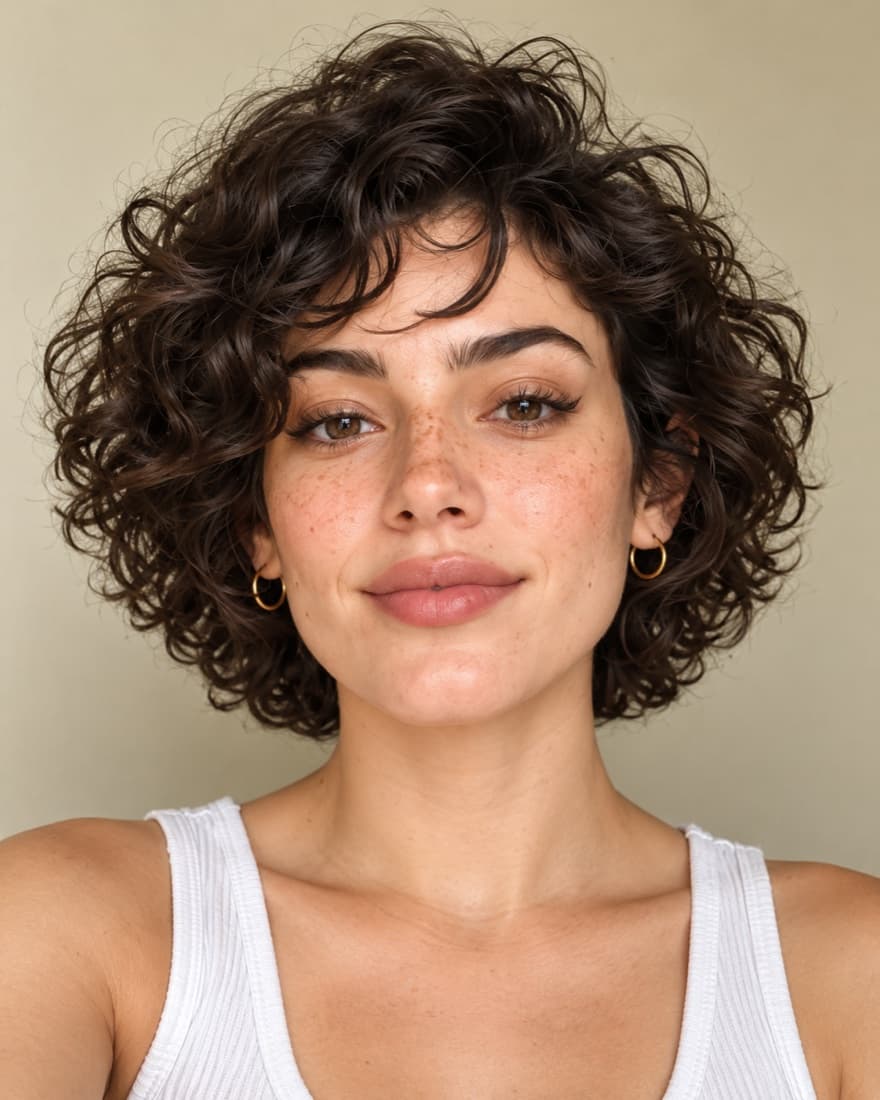
What is a face rating?
A face rating is a score that summarizes how a face measures up on some scale of attractiveness or proportion. Ratings come from three very different sources: people rating a photo (friends, forums or crowd-sourced studies), AI models trained to predict those crowd ratings, and measured geometry such as symmetry and proportions. They are reported on different scales — everyday 1–10, the harsher 1–8 PSL scale, percentiles, or 0–100 sub-scores — so the same face can be a 7, a 4 and a 60th percentile at once. A rating is only as trustworthy as its method: it should say what it measures, be stable for similar photos and explain the number. FaceTwin’s rating is built from measured geometry: symmetry 30%, golden ratio 20%, thirds 20%, canthal tilt 15% and jaw 15%, calibrated on 1,196 public figures with a median of 7.2.
- 3 sources: people, AI models, measurement
- Same face, different scales
- FaceTwin median 7.2 (p10 6.4, p90 8.0)
- Every point explained
Face rating tools and guides
Three kinds of face rating
Before comparing numbers, it helps to know where a rating comes from. Almost every face rating you will find online falls into one of three families.
Human ratings
Someone looks at a photo and gives a number. In research, many raters score each face and the average is used, which smooths out personal taste. On forums and in apps, a handful of strangers rate, so the number mostly reflects who happened to be rating. Human ratings capture things geometry cannot — expression, skin, hair, style — but they also carry the raters’ biases.
Model-based “AI beauty scores”
A neural network is trained on a dataset of faces that people have already rated, and it learns to predict the average rating for a new photo. These models can be fairly consistent, but they inherit whatever tastes and imbalances were in the training data, they are sensitive to lighting and filters, and they usually cannot tell you why you got the score.
Measured geometry
Landmarks are placed on the face and specific proportions are measured: symmetry, ratios, angles. The same photo always gives the same result and every number can be traced to a point on the image. The trade-off is scope — geometry only describes structure, not the many things people actually respond to.
Face rating scales compared
Even when two tools measure similar things, their scales can make the results look very different. This is how the common scale types behave:
| Scale | Range | What “average” looks like | Strengths | Weaknesses |
|---|---|---|---|---|
| Everyday 1–10 | 1–10 | Usually 5–7; people are generous | Intuitive, familiar | No fixed definition; inflated |
| Percentile | 0–100th | 50th by definition | Shows where you sit in a group | Only as good as the reference group |
| PSL | 1–8 | 4; deliberately harsh | Familiar in looks forums | Opinion-based, compressed, often unkind |
| 0–100 sub-scores | 0–100 per feature | Depends on the measurement | Explains each part separately | Needs a clear method to mean anything |
| AI beauty score | Varies, often 1–10 or 1–5 | Whatever the training data rated as average | Fast, consistent for one photo | Black box; inherits rater bias |
The practical lesson: never compare a number from one system with a number from another. A 6 on a harsh scale, a 7.2 on a calibrated geometric scale and a 4 on the PSL scale can describe the same face.
What makes a face rating trustworthy
You can judge any face rating — ours included — with a few questions:
- Does it say what it measures? “Your face is a 6” is not information; “your symmetry is 74%” is.
- Is it calibrated against a stated reference group, so that a number has a meaning?
- Is it stable? Two similar photos taken minutes apart should give similar results.
- Does it explain the score, so you can check it against your own photo?
- Is it honest about limits — lighting, angle, expression, and everything a photo cannot see?
- Does it respect privacy, and does it avoid rating other people without consent?
A rating that fails most of these is entertainment at best. One that passes them is still only a description of one photo, but at least you know what it is describing.
How FaceTwin’s face rating is built
FaceTwin uses measured geometry only. A face model running in your browser places 68 landmarks on your selfie; five measurements are turned into 0–100 sub-scores and combined with fixed weights into a 1–10 proportions score, plus a percentile and your face shape as a description.
| Component | Weight |
|---|---|
| Symmetry (26 mirrored landmark pairs) | 30% |
| Golden ratio proportions | 20% |
| Facial thirds balance | 20% |
| Canthal tilt | 15% |
| Jaw angle | 15% |
The scale is calibrated on 1,196 frontal photos of public figures measured with exactly the same code. In that reference set the median is 7.2, the bottom tenth sit at 6.4 or below and the top tenth at 8.0 or above. So a 7 is genuinely typical, and an 8 is high.
We do not use a model trained on crowd ratings, and we do not rate anyone but you. The rating is about proportions in a photo; it says nothing about your worth.
Why the same face gets different ratings
If you have tried several face rating sites and got wildly different numbers, that is expected. Each one uses a different source (people, a model or geometry), a different scale and a different reference group. On top of that, the photo itself moves every rating: lens distance, lighting, head angle, expression and filters. Even with one method, the most honest summary of your rating is a range across several photos, not a single figure.
Frequently asked questions
What is a face rating?
A score summarizing how a face measures up on a scale of attractiveness or proportion. It can come from human raters, an AI model trained on human ratings, or measured geometry.
What is a good face rating out of 10?
It depends on the scale. On FaceTwin’s calibrated proportions scale the median of 1,196 public figures is 7.2 and the top tenth start at 8.0.
Are AI face rating apps accurate?
Models trained on crowd ratings can be consistent, but they predict other people’s opinions, inherit their biases and rarely explain the score. Measured ratings are easier to check.
How does a 1–10 rating compare with the PSL scale?
The PSL scale runs 1–8 and is deliberately harsh, with 4 as average. An everyday 6–7 out of 10 roughly corresponds to a PSL 4. No conversion is official.
Is my photo uploaded?
Not for local lookalikes or face analysis: the model runs in your browser, so your selfie, landmarks and descriptor stay on your device. AI portraits, including the first free one, and full reports send your photo through our server to the AI provider after sign-in and separate upload consent. Reports also send your numeric measurements. FaceTwin does not save the original photo; it is discarded from request memory after processing.
How do I get my own face rating?
Upload a front-facing selfie above. FaceTwin gives you a 1–10 proportions rating, a percentile and six explained insights, free and on your device. For a feature-by-feature view, use the face rater.
Can I rate someone else’s face?
Please don’t. FaceTwin is for adults analysing their own photo, never for rating other people.
More from the same selfie
Last updated 2026-10-08. FaceTwin is for entertainment and is not identity recognition, medical or cosmetic advice.