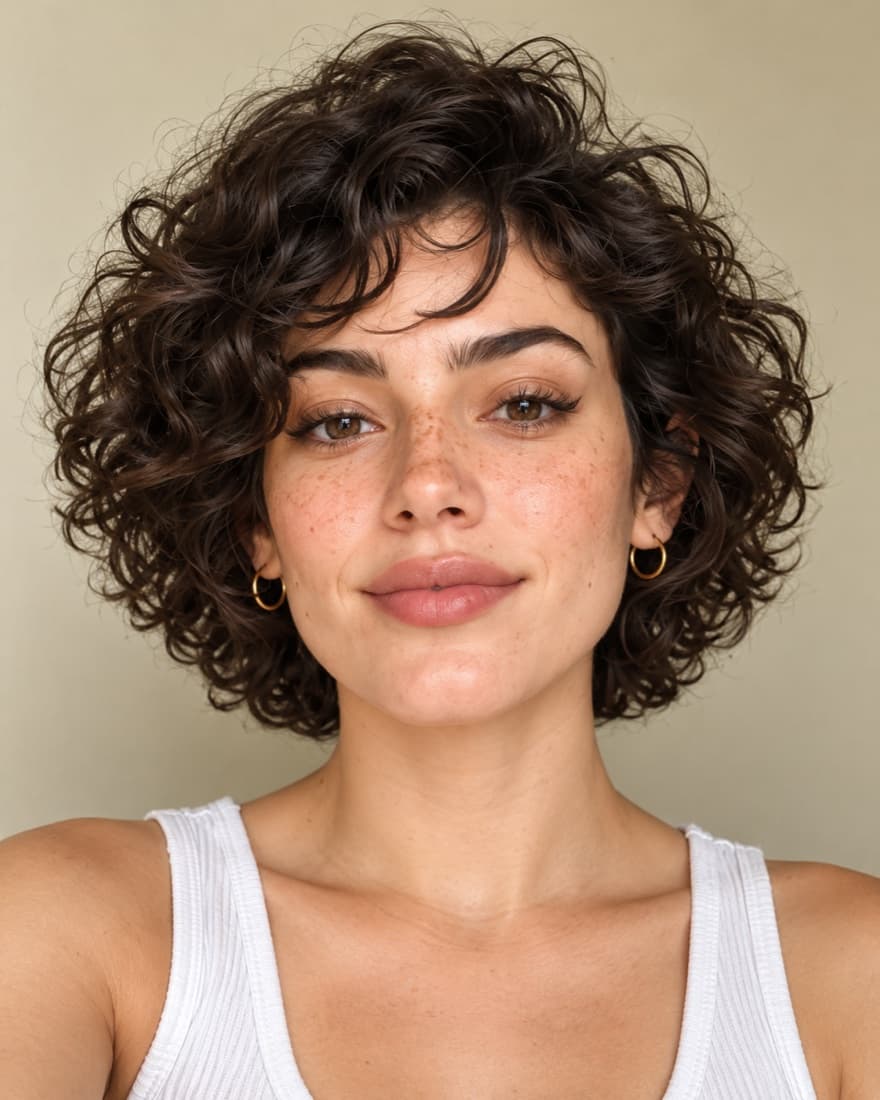
How does a “how attractive am I” picture test work?
A picture test finds your face in a photo, places landmarks on it and measures proportions such as symmetry, golden-ratio ratios, facial thirds, canthal tilt and jaw angle. FaceTwin turns those into a 1–10 proportions score with a percentile; across 1,196 frontal photos of public figures the median is 7.2 and the middle 80% fall between 6.4 and 8.0. Because every number comes from landmark positions, the picture matters as much as the face: a turned head lowers symmetry, a camera above eye level shortens the lower face and a wide-angle selfie taken too close changes the ratios. Use a sharp, front-facing photo in even light with a neutral expression and your brows and jaw visible, test three pictures and average them. The picture is analyzed in your browser and is not uploaded for the free result.
- Median 7.2 across 1,196 public figures
- Middle 80%: 6.4 – 8.0
- Test 3 pictures and average
- Free result: picture never uploaded
Related
Checklist: choosing or taking your test picture
You can use an existing photo or take a new one. Either way, run through this list first — it takes a minute and removes most of the randomness from the result.
| Check | Good test picture | Avoid |
|---|---|---|
| Resolution | Face fills at least a third of the frame, sharp eyes | Tiny faces in group shots, heavy compression, screenshots of screenshots |
| Angle | Straight on, camera at eye level, chin level | Three-quarter views, looking up at or down into the camera |
| Distance | Arm’s length or further, slight zoom if needed | Phone held a hand’s width from your face |
| Light | Soft, even light from the front, such as a window | Hard overhead light, one-sided lamps, backlight |
| Expression | Relaxed face, mouth closed or a soft smile | Wide grin, pout, raised brows, squint |
| Glasses | Off, or thin frames that don’t cover the eye corners | Sunglasses, thick frames, reflections over the eyes |
| Hair | Brows and jaw edge visible | Fringe over the brows, hair covering the cheeks or jaw |
| Filters | Unfiltered camera output | Beauty filters, face slimming, portrait-mode warping |
If you are choosing from your camera roll, passport-style photos and plain front-facing selfies are usually the best candidates. Your favorite photo of yourself is often not: flattering angles and expressions are exactly what make a picture a poor measuring sample.
What each photo problem does to your result
Every insight in the test depends on a different set of landmarks, so each photo problem skews something specific. Knowing which helps you read your result instead of just trusting it.
| Photo problem | What shifts | Typical effect on the result |
|---|---|---|
| Head turned slightly | Symmetry, face width ratios | Symmetry drops, one side reads as wider |
| Camera above eye level | Facial thirds, length ratios | Lower third and chin look shorter |
| Camera below eye level | Facial thirds, jaw angle | Lower face looks longer, jaw looks heavier |
| Head tilted sideways | Canthal tilt, symmetry | One eye reads more upturned than the other |
| Too close to the lens | Golden-ratio ratios, jaw | Nose and center of the face enlarge, jaw narrows |
| Big smile | Mouth width, jaw contour, thirds | Mouth ratios change, lower third stretches |
| Hair over brows | Brow landmarks, thirds | Middle third and brow ratios become unreliable |
| Thick glasses | Eye corners, canthal tilt | Eye landmarks shift to the frame edges |
| Uneven light | Jaw contour, symmetry | Shadowed side’s edge is placed inaccurately |
Symmetry carries 30% of the score, so the head-turn problem matters most. In our reference set, which half of the face reads as wider is strongly affected by slight head turns — a reminder of how sensitive the measurement is to a few degrees of rotation.
Why you should test three pictures and average
Even with a careful setup, no two photos are identical. Small differences in angle, expression and lighting move the landmarks by a few pixels, and a few pixels can move the score by a few tenths. One photo gives you a reading; three give you a measurement.
- Take three photos a minute apart in the same spot, resetting your posture each time.
- Run each through the test and note the 1–10 score and the six insights.
- Average the three scores. If one is far from the other two, look at that photo for a problem from the table above and replace it.
- Look at which insights stay the same across all three — those describe your face. The ones that jump around describe the photos.
A spread of a few tenths between pictures is normal. If your three scores land around the reference median of 7.2, you are exactly where a typical famous face lands when only proportions are counted.
Privacy: what happens to your picture
Uploading a picture of your face to an unknown website deserves a second thought. For the free picture test, FaceTwin doesn’t upload it at all: the face model downloads into your browser, the analysis runs on your device, and the picture, landmarks and scores stay there.
Only optional paid features, such as AI portraits and the full report, send a photo through our server to an AI provider, and only after sign-in and a separate upload consent. Even then FaceTwin does not keep the original photo. Please use only your own picture, and only if you are 18 or older.
What no picture can show
A still photo freezes one angle, one expression and one lighting setup. It cannot capture how your face moves when you talk and laugh, your voice, your warmth, your style or the way people feel around you — and those shape how attractive you seem far more than a few hundredths of a ratio.
So use the picture test as a curious look at your proportions and at what makes a photo flattering. It is entertainment, not a verdict, and a number never measures your worth.
Frequently asked questions
What is the best picture for a “how attractive am I” test?
A sharp, front-facing photo at eye level, from arm’s length or further, in soft even light, with a relaxed expression, no sunglasses or filters, and your brows and jaw visible.
Can I use an old photo instead of a new selfie?
Yes, if it meets the checklist: straight-on, sharp, unfiltered and with your face reasonably large in the frame. Group shots and angled photos give unreliable results.
Why do I get a different score with every picture?
Angle, distance, light and expression shift the landmarks the test measures. Test three pictures taken the same way and average them.
Do filters change the result?
Yes. Beauty and face-slimming filters move the jaw, eyes and nose, so the test measures the filter rather than you. Use unfiltered photos.
Is my photo uploaded?
Not for local lookalikes or face analysis: the model runs in your browser, so your selfie, landmarks and descriptor stay on your device. AI portraits, including the first free one, and full reports send your photo through our server to the AI provider after sign-in and separate upload consent. Reports also send your numeric measurements. FaceTwin does not save the original photo; it is discarded from request memory after processing.
Should I smile in the test picture?
A relaxed face or a soft, closed-mouth smile is best. A wide grin changes the mouth width, jaw contour and lower third.
Can I test a picture of someone else?
No. The test is for adults analyzing their own picture. Please don’t upload or rate other people.
More from the same selfie
Last updated 2026-10-08. FaceTwin is for entertainment and is not identity recognition, medical or cosmetic advice.