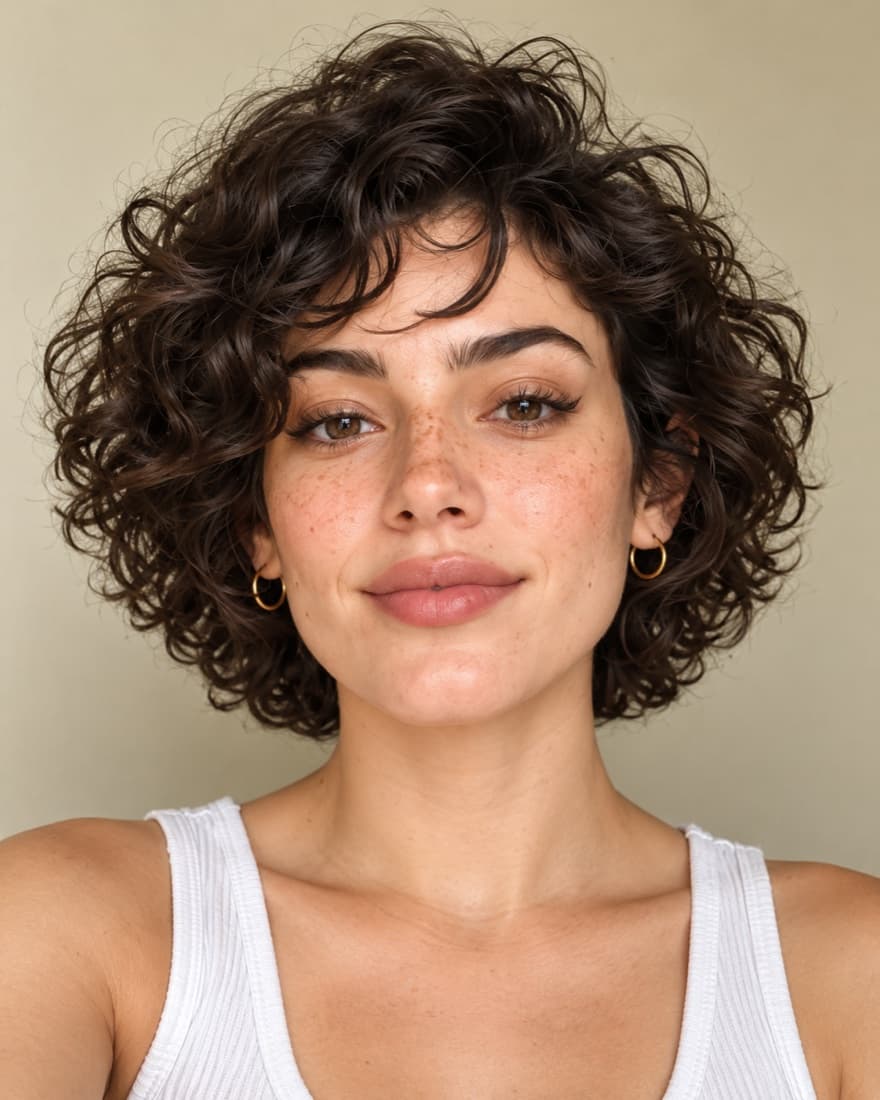
How do I determine my face shape?
To determine your face shape, pull your hair back, stand square to a mirror and take four measurements with a soft tape: forehead width, cheekbone width, jawline width and face length from hairline to chin. Then ask two questions. How does the length compare with the cheekbone width? And which width is largest? A face around one and a half times as long as it is wide, with the cheekbones widest and a slightly narrower jaw, is oval — the most common shape at 52% of our reference set of 1,196 faces. Clearly longer with similar widths is oblong; nearly as wide as long with a soft jaw is round; a broad jaw with firm corners is square; a wide forehead tapering to the chin is heart; and cheekbones clearly wider than both brow and jaw is diamond. You can confirm the answer with a mirror tracing or a selfie.
- Measure forehead, cheekbones, jaw, length
- Compare length ÷ cheekbone width
- Find which width is largest
- Oval is most common (52%)
Next steps
Method 1: measure with a soft tape
This is the most direct way to find your face shape. You need a soft tailor’s tape (a phone charging cable and a ruler work in a pinch), a mirror and good light. Write each number down as you go.
- Prepare: tie your hair back or use a headband so your hairline, temples and jaw are fully visible. Stand straight and look ahead with your chin level.
- Forehead: measure straight across the widest part of your forehead, roughly halfway between your brows and your hairline, from one side to the other.
- Cheekbones: find the most prominent point of each cheekbone, just below the outer corner of each eye, and measure across from one to the other.
- Jawline: measure from the tip of your chin to the corner of your jaw below one ear, then double it. This gives a jawline length that is easier to take on yourself than a straight width.
- Face length: measure from the center of your hairline straight down to the bottom of your chin.
- Compare: divide face length by cheekbone width, then note which of forehead, cheekbones or jaw is largest and whether the jaw corners feel sharp or rounded.
If you have a receding or very high hairline, start the length measurement where your hairline used to be or where your forehead starts to curve back. Measuring a little high or low changes the length ratio more than any other mistake.
Reading your measurements
Use the table to match your numbers to a shape. Real faces rarely tick every box, so pick the row that fits best and read the neighboring row as well if you are close.
| If your measurements show… | Your face shape is probably |
|---|---|
| Length about 1.5× the cheekbone width, cheekbones widest, jaw a little narrower and rounded | Oval |
| Length clearly more than 1.5× the width, forehead, cheekbones and jaw similar | Oblong |
| Length close to the width, full cheeks, wide jaw with soft corners | Round |
| Jaw nearly as wide as the cheekbones, sharp jaw corners, length moderate | Square |
| Forehead and cheekbones wide, jaw narrower, pointed or slim chin | Heart |
| Cheekbones clearly the widest, forehead and jaw both narrower | Diamond |
| Jaw wider than the forehead | Triangle (pear) |
For reference, the median face in our set of 1,196 is 1.449 times as long as it is wide (women 1.47, men 1.43), so a ratio near that is typical rather than unusual.
Method 2: trace your outline on a mirror
Numbers do not show curves, and the curve of the jaw and chin is often what separates round from square or oval from heart. A tracing captures it.
- Stand an arm’s length from a bathroom mirror with your hair pulled back and light coming from the front.
- Close one eye and keep your head still — this stops the outline from shifting as your eyes refocus.
- With a washable marker, lipstick or a bar of soap, trace the outline of your face from the hairline, down past the cheekbones and around the chin.
- Step back and look at the drawing as a shape: is it long or short, widest at the top, middle or bottom, and are the lower corners rounded or angular?
- Compare it with the decision table above, then wipe the mirror clean.
Method 3: let a photo do the measuring
The tool at the top of this page measures the same lines from a selfie, in your browser, in about a second. It places 68 landmarks, computes length ÷ cheekbone width, jaw ÷ cheekbone width and brow ÷ cheekbone width, measures your jaw angle and names the nearest of six shapes. Take the photo at eye level from a little further away than usual, with a neutral face and hair off your forehead and jaw. One limit to keep in mind: the landmark model cannot see your hairline, so the forehead is estimated — which is why pairing the photo with your tape measurement of face length is a good idea. The analyzer page explains every threshold.
Common mistakes
- Leaving hair down: hair over the forehead or jaw hides the very edges you are trying to measure.
- Tilting the chin: looking down shortens your face; looking up lengthens it.
- Measuring from too close: a selfie at arm’s length makes the middle of the face look wider.
- Pulling the tape tight: a soft tape should rest on the skin, not press into it.
- Judging from a smile: smiling widens the cheeks and changes the jawline.
- Expecting a perfect fit: many faces sit between two shapes, and that is normal.
What to do with your result
A face shape is a starting point for choosing haircuts and glasses, not a verdict on your looks. The general idea is balance: add what your shape has less of.
| Shape | Haircut direction | Glasses direction |
|---|---|---|
| Oval | Nearly anything; let hair texture decide | Frames about as wide as the cheekbones, most shapes |
| Round | Height at the crown and length past the chin | Angular frames such as rectangles |
| Square | Soft texture and side-swept lines around the jaw | Round or oval frames to soften corners |
| Heart | Fullness around the chin, light at the temples | Frames heavier at the bottom, or rimless |
| Oblong | A fringe and volume at the sides | Deep, bold frames that break up length |
| Diamond | Volume at the forehead and jaw | Oval frames or cat-eye shapes |
If you landed on round, our hairstyles for a round face page goes through specific cuts. For any shape, the detector result also lists three haircuts and three frame styles chosen for it.
Frequently asked questions
What face shape do I have?
Measure your forehead, cheekbones, jaw and face length, then use the decision table on this page — or upload a selfie above for an instant answer with the ratios shown.
How can I find my face shape without a tape measure?
Trace your outline on a mirror with a washable marker, or use the free photo tool at the top of the page.
Is my photo uploaded?
Not for local lookalikes or face analysis: the model runs in your browser, so your selfie, landmarks and descriptor stay on your device. AI portraits, including the first free one, and full reports send your photo through our server to the AI provider after sign-in and separate upload consent. Reports also send your numeric measurements. FaceTwin does not save the original photo; it is discarded from request memory after processing.
Where do I measure my forehead?
Across the widest part, roughly halfway between your eyebrows and your hairline, with your hair pulled back.
What if my measurements fit two shapes?
That is common. Read the advice for both — haircuts and frames that suit both shapes will suit you.
Is my face shape the same for life?
Bone structure stays largely the same in adulthood, but changes in weight and age can move a borderline face toward a neighboring shape.
What is the most common face shape?
Oval: 52% of our reference set of 1,196 faces. Diamond was the rarest at 3.8%.
More from the same selfie
Last updated 2026-10-08. FaceTwin is for entertainment and is not identity recognition, medical or cosmetic advice.