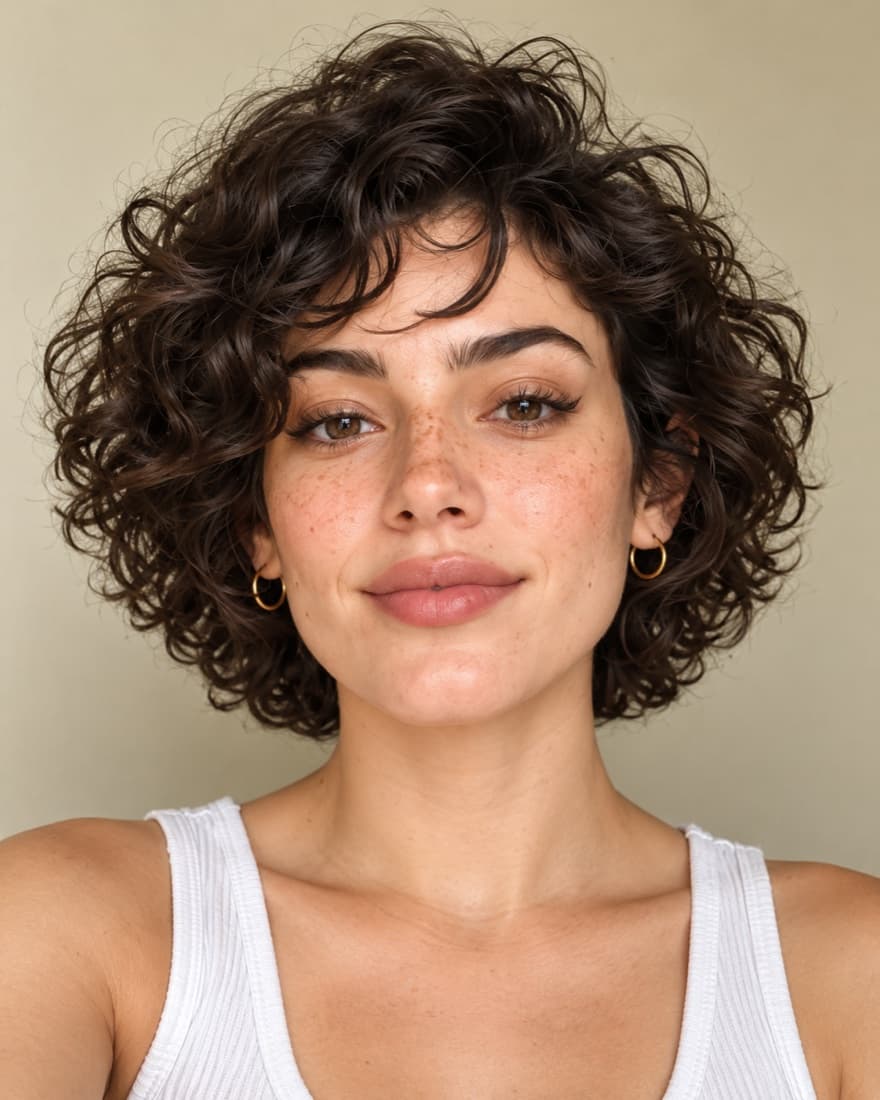
Which celebrity do I look like?
To find out which celebrity you look like, upload one front-facing selfie of yourself to the tool above. FaceTwin turns your face into a 128-number descriptor in your browser, compares it with 2,333 public figures and shows the five closest, each with a similarity percentage and the measured traits you share. Your best match is usually around 80% similar. Keep in mind that the model judges resemblance differently from people. It focuses on facial structure — eye spacing, jaw width, nose length — and largely ignores hairstyle, makeup and fashion, which are exactly the things friends notice first. So your twin may have different hair, a different age or even a different gender and still be a genuine structural match. Try two or three photos: the celebrity who keeps returning is your most dependable answer.
- One selfie → five closest public figures
- Best match is usually ≈ 80% similar
- Model reads structure, people read style
- Repeat matches across photos are most reliable
Related
The fastest way to get your answer
If you only want the name, scroll up, tick the 18+ box and add a selfie. Within a second or two you will see five public figures ranked by similarity. That is the direct answer to “who’s my celebrity look alike?”. The rest of this page helps you make sense of it — especially if the top name surprises you.
- Use a recent, straight-on photo of yourself in daylight.
- Look at all five names, not just the first; they are often close together.
- Read the shared-traits line to see what the model actually matched on.
- Repeat with one or two more photos and note which names come back.
What “look like” means to a face model
A face-recognition model was trained for one job: telling whether two photos show the same person. To do that reliably, it learned to ignore things that change from day to day — hair, makeup, clothing, lighting — and to rely on what stays put: the geometry of the eyes, nose, mouth and jaw and how they relate to each other. Each face becomes a point in a 128-number space, and “looking alike” simply means being close together in that space.
That makes the model good at spotting a shared bone structure that people might miss, and bad at the overall impression people rely on. It is not perfectly blind to styling: heavy contouring, a fringe covering the brows or a beard hiding the jawline can still shift the numbers, because they change what the camera sees of your features.
What “look like” means to people
When friends say you look like someone, they are usually reacting to a quick, whole-face impression. Research on face perception has long shown that people lean heavily on external cues. In practice, that means:
- Hair: color, length and cut are often the first thing people match on.
- Style: glasses, makeup, facial hair and clothing set the overall look.
- Expression: a signature smile or a habitual frown carries a lot of resemblance.
- Context: age, gender and the roles someone is known for prime people to see a match — or to miss one.
Neither view is wrong. The model answers “whose features are built like mine?”, while people answer “who gives the same impression?”. The most convincing twins satisfy both — which is why it helps to put your photo next to your top match and look past the hair.
How the similarity percentage is worked out
The finder measures the distance between your descriptor and each celebrity’s descriptor. Small distances mean similar faces. Raw distances are hard to read, so FaceTwin maps them onto a percentage calibrated on its own index of 2,333 faces.
| Similarity | How to read it |
|---|---|
| 90% or more | A striking structural resemblance — rare and worth a double take |
| About 80% | The typical best match for most people |
| 70–79% | Several shared features, different overall impression |
| Below 70% | A loose resemblance in one or two features |
Because there is no industry standard for this mapping, never compare a FaceTwin percentage with a number from another site. Compare runs inside FaceTwin, and use the gap between your first and fifth match as a clue: a big gap means one face is clearly closest, a small gap means several are nearly tied.
Why your twin may be a different gender or age
With the filter set to “everyone”, the finder searches the whole index, and nothing stops a woman’s nearest neighbor from being a man, or a 25-year-old’s from being someone photographed in their sixties. Bone structure is shared across genders and ages far more than hairstyles are. If that feels odd, switch the filter to women or men; the search reruns inside that group and you get the closest matches there.
Age shows up in a second way too. Each public figure is represented by one portrait, taken at one point in their life. Your match may resemble you most in that particular photo, even if you picture them differently from a film made decades earlier or later.
Fun ways to compare with friends
Lookalikes are more fun as a group — as long as everyone takes part with their own face and their own say-so.
- Everyone runs the finder on their own phone with their own selfie, so each photo stays on its owner’s device.
- Each person shares their card in the group chat if they want to — nobody uploads or rates anyone else.
- Guess first: before revealing, let the group guess each person’s top match, then compare with the result.
- Look for overlaps: siblings or close friends sometimes share a match, which makes a good conversation starter.
- Keep it kind: matches are entertainment, not a ranking, and a lower percentage says nothing about anyone’s looks.
Frequently asked questions
Who’s my celebrity look alike?
Upload a front-facing selfie of yourself above. The finder compares your face with 2,333 public figures and shows your five closest matches with a similarity percentage and shared traits.
How do I find my celebrity look alike for free?
Use the free tool at the top of this page. There is no account, no paywall for results and no ads, and your photo never leaves your device.
Is my photo uploaded?
Not for local lookalikes or face analysis: the model runs in your browser, so your selfie, landmarks and descriptor stay on your device. AI portraits, including the first free one, and full reports send your photo through our server to the AI provider after sign-in and separate upload consent. Reports also send your numeric measurements. FaceTwin does not save the original photo; it is discarded from request memory after processing.
Why don’t my friends agree with my result?
People judge resemblance largely by hair, style and expression, while the model compares facial structure. Both can be right about different things.
Why is my lookalike a different gender?
Facial structure overlaps across genders. Set the filter to women or men if you want matches from one group only.
Does hair or makeup change my match?
Less than you might think, because the model focuses on structure. Hair covering the brows or jaw, or heavy contouring, can still nudge the numbers.
Can I find out which celebrity a friend looks like?
Let them run it themselves on their own device. FaceTwin is meant for adults exploring their own face, so please do not upload other people’s photos.
More from the same selfie
Last updated 2026-10-08. FaceTwin is for entertainment and is not identity recognition, medical or cosmetic advice.