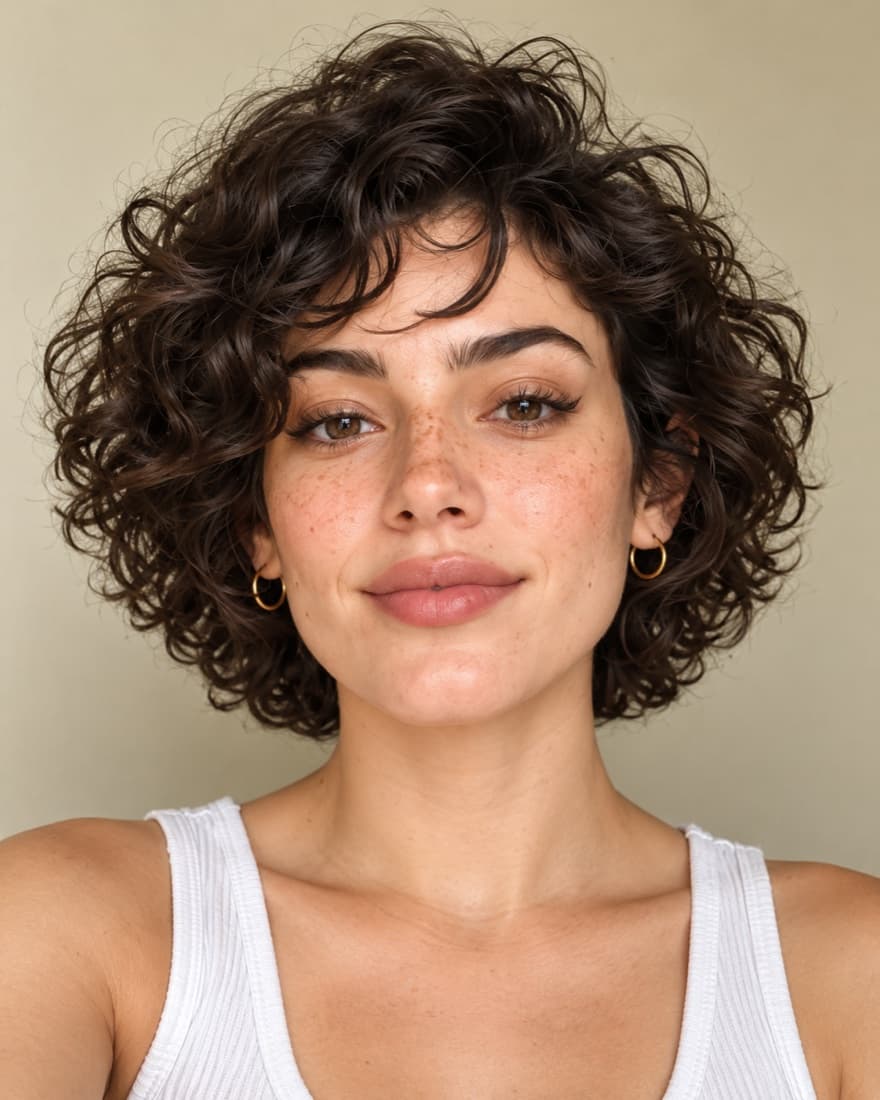
What is a negative canthal tilt?
A negative canthal tilt is an eye shape where the line from the inner corner of the eye to the outer corner slopes slightly downward, so the outer corner sits lower. It is a normal variation, not a defect. In our reference set of 1,196 frontal photos of public figures, 9.4% have a negative tilt by FaceTwin’s bands (below +1°), compared with 70.2% neutral and 20.5% positive. It is more common among the men in the set (12.5%) than the women (5.4%). A downward eye line usually comes from inherited eye and cheekbone structure, and the outer corners can relax lower with age. It tends to read as soft, gentle or friendly. Camera angle, expression and makeup shift the measurement by a few degrees, so measure several neutral, eye-level photos before drawing conclusions.
- 9.4% negative in 1,196 faces
- Men 12.5% · women 5.4%
- Negative band: below +1°
- Usually reads soft and friendly
Canthal tilt guides
Negative canthal tilt, defined
The canthi are the corners where your upper and lower eyelids meet: the medial canthus near the nose and the lateral canthus at the outside. Draw a line between them and compare it with horizontal. If the outside end is lower, the tilt is negative; if it is higher, positive; if it is about level, neutral.
Clinicians usually measure on the bony attachment of the eyelids, where a perfectly level line is 0°. FaceTwin measures from landmarks on the visible eyelid fold, which reads a few degrees more upturned, so we call anything below +1° negative. That keeps our “negative” group to faces where the downward slope is actually visible, instead of labelling small measurement noise.
How common is a negative canthal tilt?
Less common than online discussions suggest. We ran the same tilt measurement used in the tool on 1,196 frontal, openly licensed photos of actors, musicians, athletes and other public figures:
| Group | Negative tilt | Median tilt |
|---|---|---|
| All 1,196 faces | 9.4% | +3.5° |
| Women (540) | 5.4% | +4.0° |
| Men (646) | 12.5% | +3.0° |
Roughly one face in ten falls in the negative band, and many of those are only a degree or two below neutral. Public figures are not a random sample of everyone, so treat these numbers as a reference point. What they clearly show is that a negative tilt appears among people who are photographed professionally, often in leading roles.
Why some eyes tilt downward
Eye shape is mostly structural. A few general factors influence where the outer corner sits:
- Genetics: the shape of the eye socket, the position of the cheekbones and the way the eyelid tendons attach are largely inherited, so tilt often runs in families.
- Age: over the years skin and the supporting tissue around the eyes gradually relax, and the outer corners can drift lower.
- Lower-lid laxity: when the lower eyelid is looser, it can sit lower at the outside and make the eye line slope down.
- Brow position: a heavy or low outer brow does not change the tilt itself, but it pushes soft tissue down and makes the outer eye look lower.
None of this is a health problem on its own. A negative tilt is a normal variation of a healthy face.
How a negative canthal tilt reads — and the myths
Faces with a slightly downturned eye line are often described as soft, warm, gentle, thoughtful or approachable. Several actors known for kind, friendly screen presences are often cited as examples of a slight negative tilt. The overall impression depends far more on brows, expression and how the eyes move when you smile than on a few degrees of angle.
- Myth: a negative tilt makes a face unattractive. Attractiveness depends on the whole face, expression and style; a small angle is one minor detail.
- Myth: it always makes you look tired or sad. Puffiness, dark circles and lack of sleep do that; a relaxed smile changes the reading entirely.
- Myth: everyone online with a “negative tilt” has one. Selfies taken from below and with a head tilt routinely read several degrees more negative than reality.
- Myth: it needs fixing. It is a normal shape, and how you feel about it matters more than the number.
Makeup and brow tricks that lift the eye line
If you like a more lifted look, it is easy to create one without changing anything permanent:
- Shape the brows so the tail ends level with or slightly above the start, rather than dipping down.
- Wing your eyeliner up and out from the outer third of the upper lid instead of following the natural downward line.
- Keep lower-lash liner and dark shadow away from the outer lower corner, which emphasizes the downward slope.
- Brighten the outer corner with a little concealer or a light shadow.
- Curl the outer lashes upward; lash direction changes where the eye seems to end.
Many people also love the soft, doe-eyed look and choose makeup that leans into it. Both are equally valid.
Photo angles, and when to see a doctor
Canthal tilt is a small angle, so photos move it easily. Shooting from below makes outer corners look lower; tilting your head adds degrees to one eye and removes them from the other; a squint or smile lifts them. For a fair reading, hold the camera at eye level, face it squarely, keep a neutral expression and measure two or three photos.
A naturally downturned eye shape is not a medical issue. It is worth seeing an eye doctor or oculoplastic specialist if something changes: for example, if a lower lid starts pulling down or away from the eye, if this happens after eyelid or facial surgery or an injury, or if you have irritation, watering or trouble closing the eye. Any procedure that changes eye shape is a medical decision for a qualified professional. FaceTwin is entertainment and does not give medical advice.
Frequently asked questions
How do I know if I have a negative canthal tilt?
Upload a neutral, eye-level selfie above. FaceTwin measures the angle from your inner to outer eye corners in degrees and labels it negative if it is below +1°.
How common is negative canthal tilt?
In our reference set of 1,196 faces, 9.4% have a negative tilt: 12.5% of men and 5.4% of women.
Is a negative canthal tilt unattractive?
No. It is a normal variation that often reads as soft and friendly, and it appears among many professionally photographed faces. The whole face and expression matter far more.
Can a negative canthal tilt change over time?
The outer eye area can relax with age, which can make the tilt look slightly more negative. Bone structure itself does not change in adulthood.
Can makeup fix a negative canthal tilt?
Makeup cannot change the angle, but upward-winged liner, lifted brow tails, a brightened outer corner and curled outer lashes create a more lifted eye line.
Is my photo uploaded?
Not for local lookalikes or face analysis: the model runs in your browser, so your selfie, landmarks and descriptor stay on your device. AI portraits, including the first free one, and full reports send your photo through our server to the AI provider after sign-in and separate upload consent. Reports also send your numeric measurements. FaceTwin does not save the original photo; it is discarded from request memory after processing.
Should I see a doctor about my canthal tilt?
Only if something changes or causes symptoms, such as a lower lid pulling down after surgery or injury, irritation or watering. A naturally downturned eye shape on its own is normal.
More from the same selfie
Last updated 2026-10-08. FaceTwin is for entertainment and is not identity recognition, medical or cosmetic advice.