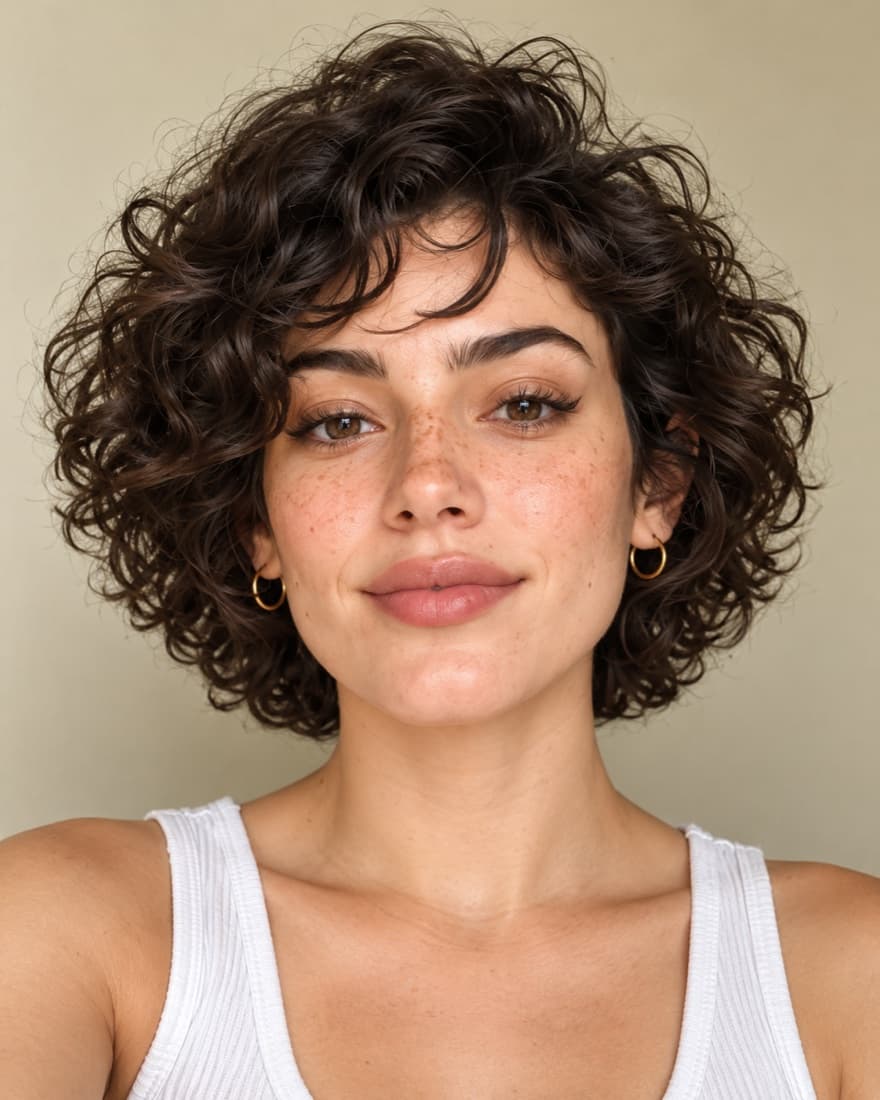
What is the difference between hunter eyes and prey eyes?
Hunter eyes is an online term for eyes that sit relatively deep under a low, fairly straight brow, with little of the upper eyelid visible and an eye line that is level or tilts slightly upward at the outer corner. They tend to read as intense or focused. Prey eyes describes the opposite cluster: more visible upper eyelid and sometimes more white of the eye, higher or more arched brows, and a level or slightly downward tilt — a look often read as open, gentle or expressive. Neither is a medical category, and both are mixes of bone structure, soft tissue, brow shape and expression. Of those parts, a selfie can measure canthal tilt reliably; FaceTwin does that in degrees. In our reference set of 1,196 faces, 70.2% had a neutral tilt, 20.5% positive and 9.4% negative. We do not measure eyelid exposure or eye depth.
- Hunter: deep-set, low straight brow, little lid show
- Prey: more lid show, higher brow, softer tilt
- Tilt in 1,196 faces: 70.2% neutral · 20.5% positive
- We measure tilt — not eyelid exposure or depth
Measure the part you can measure
What people mean by hunter eyes
The phrase comes from looks forums, where the idea was that a predator’s gaze is narrowed and focused. Stripped of the slang, “hunter eyes” describes a cluster of features that often appear together:
- Eyes that sit relatively deep, with the brow bone projecting a little over them.
- A low, fairly straight brow that sits close to the eye.
- Little visible upper eyelid when looking straight ahead — the crease is hidden or nearly hidden.
- A neutral-to-positive canthal tilt, meaning the outer corner is level with or slightly above the inner corner.
- Often a horizontally longer eye shape rather than a round one.
Several actors with brooding screen presences are often cited as examples, but the label is descriptive, not a grade. Plenty of faces have one or two of these traits without the full set.
What people mean by prey eyes
“Prey eyes” is the counterpart term, named after animals whose eyes look wide and alert. It describes features such as more visible upper eyelid, more visible white of the eye (especially above or below the iris), brows that sit higher or arch more, and a neutral-to-negative tilt. The overall impression is usually open, soft and expressive.
The name sounds unkind, and it says nothing about how attractive a face is. Wide, open eyes are a celebrated look in many styles of beauty, and many well-known faces have exactly this eye area. In our reference set of 1,196 public figures, a neutral eye line was by far the most common, and a negative tilt appeared in 9.4% — completely ordinary among people photographed for a living.
Hunter eyes vs prey eyes: side by side
| Feature | Hunter eyes | Prey eyes | Measured by FaceTwin? |
|---|---|---|---|
| Canthal tilt | Neutral to positive | Neutral to negative | Yes, in degrees |
| Brow position | Low, close to the eye | Higher above the eye | Partly: the brow line is traced, not its height above the lid |
| Brow shape | Fairly straight | More arched | Partly, from brow landmarks |
| Upper eyelid show | Little or none | Clearly visible | No |
| Eye depth | Deep-set | Flatter, more prominent | No — a frontal photo can’t see depth |
| Visible white of the eye | Little | More, sometimes above or below the iris | No |
| Typical impression | Intense, focused | Open, gentle, expressive | — |
Most people are somewhere in between, and the same person can look more “hunter” when relaxed and squinting slightly in sunlight, and more “prey” when surprised or smiling.
What a selfie can and can’t measure
The FaceTwin analysis above places 68 landmarks on your face inside your browser. Four of them mark the eye corners, which lets us measure canthal tilt in degrees, averaged over both eyes. Our bands are positive at +5° or more, neutral from +1° to +5° and negative below +1°, calibrated on our reference set where the median was +3.5° (women +4.0°, men +3.0°). The brow is traced by five landmarks per side, so its general line is visible in the overlay.
What we can’t measure is just as important. The 68-point model has no landmarks on the eyelid crease, so it cannot tell how much upper eyelid shows. A frontal photo has no depth information, so it cannot tell how deep-set your eyes are. Any tool that claims to give you a hunter-eyes verdict from one selfie is guessing those parts. We’d rather show you one number we can stand behind.
Genetics, age and the myths
Eye-area shape is mostly inherited: the shape of the brow bone and eye socket, the amount of fat around the eyes and the structure of the eyelid all vary naturally between families and across the world. It also changes with age. Brows tend to descend, upper lids gain skin and the outer corner can relax downward, so tilt and lid show shift slowly over decades.
- Mewing: there is no good evidence that tongue posture changes adult eye or brow structure.
- Eye or brow “exercises”: no reliable evidence that they reshape the bone or eyelid.
- Squinting on purpose: it changes the look in a photo, not the eye itself, and it can read as tension.
- Surgery: procedures exist, but whether one is appropriate is a medical decision for a qualified professional, not something to decide from an online label.
Grooming, makeup and wellbeing
Brows shape the eye area more than anything else you can change. Keeping them full and fairly straight, with the tail level rather than dropping, gives a lower, more focused look; a defined arch opens the eye. Tinted brow gel adds density without harsh lines. Eyeliner smudged along the upper lash line, with a slight upward extension at the outer corner, mimics a lifted tilt; tightlining makes the eye look deeper. Curled lashes and light concealer at the outer corner brighten it. Sleep, less salt and a cool compress help with morning puffiness. For photos, keep the camera at eye level with soft front light.
Both labels describe normal variation. Scores and labels on FaceTwin are entertainment, not a measure of worth, and you should only analyze your own photo. If worries about your eyes or face are taking up a lot of your day, talking to a doctor or counselor can help.
Frequently asked questions
What are hunter eyes?
An online term for deep-set eyes under a low, fairly straight brow, with little visible upper eyelid and a neutral-to-positive canthal tilt.
What are prey eyes?
The counterpart term: more visible upper eyelid and white of the eye, higher or arched brows and a neutral-to-negative tilt, giving an open, gentle look.
Can a test tell me if I have hunter eyes?
Only partly. A selfie can measure canthal tilt, and FaceTwin does that in degrees. It cannot reliably measure eyelid exposure or how deep-set your eyes are.
Can you get hunter eyes by mewing?
There is no good evidence that mewing changes adult eye or brow structure. Brow grooming and makeup change the look far more.
Are hunter eyes more attractive than prey eyes?
No. Both are normal variations and both appear in many well-known faces. Attractiveness depends on the whole face, expression and style.
Is my photo uploaded?
Not for local lookalikes or face analysis: the model runs in your browser, so your selfie, landmarks and descriptor stay on your device. AI portraits, including the first free one, and full reports send your photo through our server to the AI provider after sign-in and separate upload consent. Reports also send your numeric measurements. FaceTwin does not save the original photo; it is discarded from request memory after processing.
What is the link between hunter eyes and canthal tilt?
Canthal tilt is one ingredient of hunter eyes: they usually have a level or slightly upturned eye line. Tilt alone doesn’t make eyes look hunter or prey.
More from the same selfie
Last updated 2026-10-08. FaceTwin is for entertainment and is not identity recognition, medical or cosmetic advice.