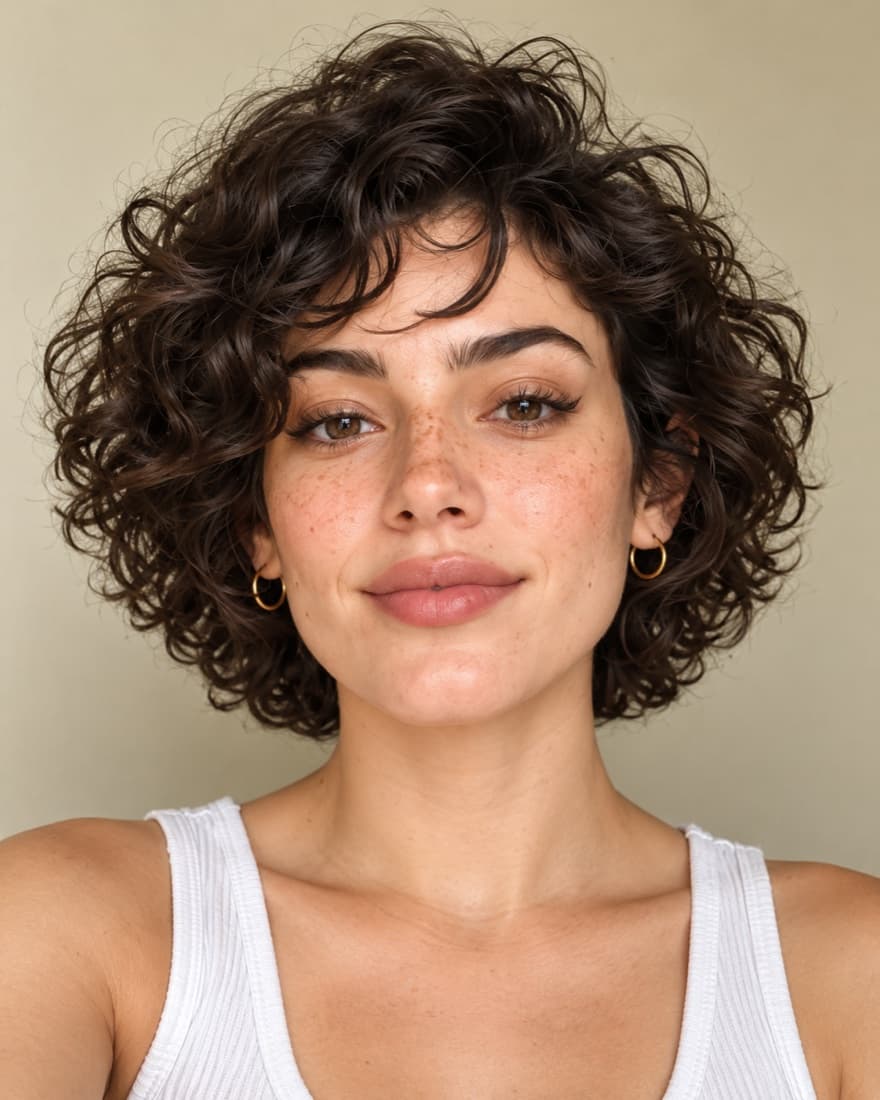
What is a positive canthal tilt?
A positive canthal tilt is an eye shape where the line from the inner corner of the eye to the outer corner slopes upward, so the outer corner sits higher. FaceTwin calls a tilt positive at +5° or more, measured from landmarks on the visible eyelid fold. In our reference set of 1,196 frontal photos of public figures, 20.5% have a positive tilt, 70.2% neutral and 9.4% negative, with a median of +3.5°. Positive tilt is almost twice as common among the women in the set (27.8%) as the men (14.6%), and the women’s median is about one degree higher (+4.0° vs +3.0°). An upturned eye line often reads as alert or cat-like, and it is the look winged eyeliner imitates. More positive is not automatically better: very steep tilts look unusual, and the whole face matters far more.
- 20.5% positive in 1,196 faces
- Women 27.8% · men 14.6%
- Positive band: +5° or more
- Median tilt +3.5°
Canthal tilt guides
Positive canthal tilt, defined
Every eye has an inner corner (the medial canthus) and an outer corner (the lateral canthus). The canthal tilt is the angle of the line between them relative to horizontal. When the outer corner is higher, the angle is positive and the eye looks upswept at the outside.
Because the landmark model marks the corners on the visible skin fold rather than on bone, its readings run a few degrees higher than a clinical measurement. That is why FaceTwin’s positive band starts at +5°, not at 0°: we calibrated the bands on our reference faces so that “positive” means a tilt you can actually notice, not just the typical slight upturn most eyes have.
How common is a positive canthal tilt?
About one face in five in our data. The measurement in the tool was run on 1,196 frontal photos of public figures (540 women, 646 men):
| Group | Positive (+5° or more) | Neutral | Negative | Median tilt |
|---|---|---|---|---|
| All | 20.5% | 70.2% | 9.4% | +3.5° |
| Women | 27.8% | 66.9% | 5.4% | +4.0° |
| Men | 14.6% | 72.9% | 12.5% | +3.0° |
Two things are worth noticing. Even in a group of people photographed for a living, most eyes are neutral rather than positive. And the difference between women and men is real but modest — about one degree at the median — which partly reflects brow and eyelid shape, and possibly eye makeup in some photos.
What a positive canthal tilt reads as
An upturned eye line is commonly described as alert, bright, youthful, confident or cat-like. It draws the eye outward and upward, which can make the face look more lifted. Several models and actresses known for “almond” or “fox” eyes are often cited as examples.
But the impression depends on the rest of the face. The same tilt can look playful with a raised brow and a smile, or intense with a low, straight brow. Tilt is one small part of a face — in the FaceTwin 1–10 proportions score it carries 15% of the weight — and it is the measurement most affected by expression and makeup.
Positive canthal tilt and hunter eyes
Online, positive tilt is often treated as the key ingredient of “hunter eyes”. In fact the term describes a combination: deep-set eyes, a low and fairly straight brow, little visible upper eyelid and a horizontal or slightly upturned eye line. Tilt alone does not capture that look.
| Trait | Positive canthal tilt | Hunter eyes (online term) |
|---|---|---|
| Eye-corner angle | Outer corner clearly higher | Neutral to slightly positive |
| Brow | Any position | Low and fairly straight |
| Upper eyelid | Any amount visible | Little visible |
| Depth | Any | Deep-set |
| Typical impression | Alert, lifted, cat-like | Intense, focused |
So you can have a positive tilt with wide, open, doe-like eyes that are nothing like hunter eyes, and hunter eyes with a tilt that is only neutral.
How makeup imitates a positive tilt
The winged-liner look is essentially a positive tilt drawn on. Makeup artists lift the eye line by:
- Extending liner from the outer third of the upper lid up toward the end of the brow.
- Placing darker shadow in an upward diagonal at the outer corner and keeping the lower outer lash line light.
- Lifting brow tails so they end slightly above the brow start.
- Using lashes that are longest at the outer edge and angled upward.
Because these tricks work so well, a made-up eye can measure several degrees more positive than the same eye bare. If you want your natural tilt, measure a photo without eye makeup.
Why “more positive” isn’t better
Online rating communities sometimes treat canthal tilt as a number to maximize. That misunderstands both the data and how faces are perceived. The most common result among public figures is neutral, a slight upturn is already typical, and a steep tilt changes the character of a face rather than simply improving it — it can look severe or unusual if the brows and cheeks do not match.
There is also no reason to chase a number through procedures. Surgery around the eyes carries real risks and is a medical decision for a qualified surgeon, not something to plan from a selfie. FaceTwin is for entertainment; the tilt reading is a description of one photo, not a measure of your worth.
Frequently asked questions
How do I know if I have a positive canthal tilt?
Upload a neutral, eye-level selfie above. FaceTwin measures the angle from your inner to outer eye corners and labels it positive at +5° or more.
How common is positive canthal tilt?
In our reference set of 1,196 faces, 20.5% are positive: 27.8% of women and 14.6% of men. Neutral is the most common result at 70.2%.
Is a positive canthal tilt more attractive?
A slightly upturned eye line is often described as alert or youthful, but attractiveness depends on the whole face, expression and style. Many attractive faces are neutral.
Is positive canthal tilt the same as hunter eyes?
No. Hunter eyes is an online term for deep-set eyes with a low, straight brow and little visible eyelid. Tilt is only the angle of the eye line.
Why does my tilt look more positive when I smile?
Smiling lifts the cheeks and the outer eye corners. For a fair measurement use a relaxed, neutral expression and hold the camera at eye level.
Is my photo uploaded?
Not for local lookalikes or face analysis: the model runs in your browser, so your selfie, landmarks and descriptor stay on your device. AI portraits, including the first free one, and full reports send your photo through our server to the AI provider after sign-in and separate upload consent. Reports also send your numeric measurements. FaceTwin does not save the original photo; it is discarded from request memory after processing.
Can makeup create a positive canthal tilt?
It can create the look: upward-winged liner, lifted brow tails and outer-corner lashes all raise the visible eye line, though the underlying angle does not change.
More from the same selfie
Last updated 2026-10-08. FaceTwin is for entertainment and is not identity recognition, medical or cosmetic advice.