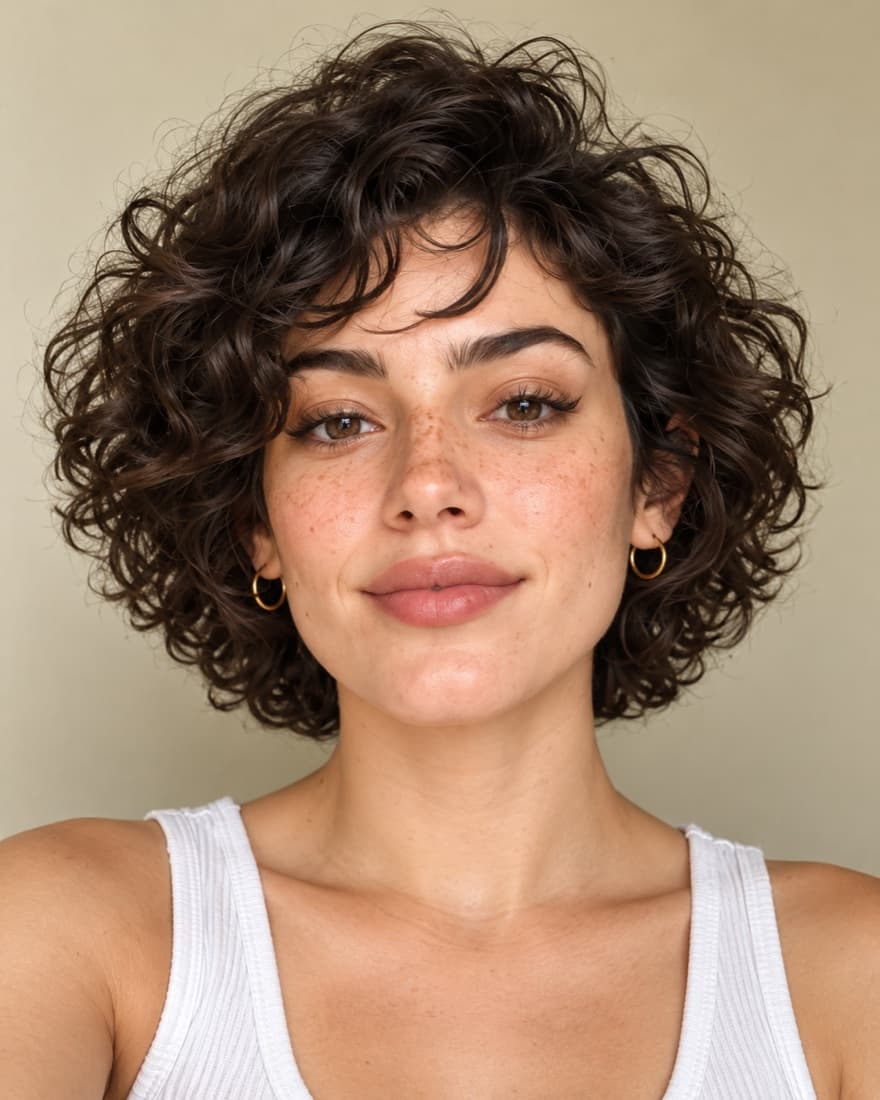
How does a face attractiveness test work?
A face attractiveness test scores the geometry of one photo, not your attractiveness as people experience it. FaceTwin’s version places 68 landmarks on your selfie inside your browser and measures five proportions: left–right symmetry (30% of the score), two golden-ratio checks (20%), facial thirds (20%), canthal tilt (15%) and jaw angle (15%). Each becomes a 0–100 sub-score, and the weighted total is turned into a 1–10 score and a percentile. Across 1,196 frontal photos of public figures the median is 7.2 and the middle 80% fall between 6.4 and 8.0, so most faces land near 7. If you searched for an attractiveness test face scan, this is it: free, no sign-up, and the photo never leaves your device. Accuracy is limited by the photo itself — lens distance, head angle and expression move the numbers — and the result is entertainment, not a measure of your worth.
- 5 measurements, fixed weights
- Median 7.2 across 1,196 public figures
- Middle 80%: 6.4 to 8.0
- Computed on your device
Related tests and guides
What the test measures on your face
The test only reports what it can actually calculate from landmark positions. It does not look at skin, hair colour, makeup, clothes or anything that would require judging you as a person. These are the five scored measurements, plus one descriptive result, with what a typical face looks like in our reference set of 1,196 public figures.
| Measurement | How it is calculated | Weight | Reference set |
|---|---|---|---|
| Symmetry | Left/right landmark pairs mirrored across the facial midline | 30% | Median 79%; only 17% reach 90% or more |
| Golden ratio | Face length to width, and nose-to-chin vs lips-to-chin, compared with 1.618 | 20% | Median sub-score 77; median length-to-width 1.449 |
| Facial thirds | Brow-to-nose height compared with nose-to-chin height | 20% | Median sub-score 75 |
| Canthal tilt | Angle from the inner to the outer corner of each eye | 15% | 70.2% neutral, 20.5% positive, 9.4% negative |
| Jaw angle | Average angle at the two corners of the jaw | 15% | Median 145.9°; 63.2% balanced |
| Face shape | Length-to-width and jaw-to-cheekbone ratios | Not scored | Oval is most common at 52% |
Every measurement is drawn on your photo, so you can check that the landmarks sit where they should before trusting a number.
How the five numbers become a 1–10 score
Each measurement is first converted to a sub-score from 0 to 100. Symmetry is used directly. The golden-ratio sub-score rewards proportions close to 1.618. The thirds sub-score is highest when the middle and lower thirds are equal. Canthal tilt rewards a neutral-to-positive angle, and the jaw sub-score peaks around a balanced angle rather than the sharpest possible one.
- Landmarks: a face model in your browser places 68 points on the brows, eyes, nose, lips and jaw contour.
- Alignment: the face is rotated level, and photos turned too far to the side are rejected with a message asking for a frontal photo.
- Sub-scores: the five measurements above are each scored from 0 to 100.
- Composite: the sub-scores are combined with fixed weights — 30, 20, 20, 15 and 15 percent.
- Scale: the composite is placed on a gentle 1–10 curve calibrated on frontal photos of public figures, and a percentile shows where you sit in that group.
Because the weights are fixed and published, the same photo always gives the same score, and you can see which measurement pulled your number up or down.
What your score means
The 1–10 number describes how closely the proportions in one photo match textbook ideals, relative to a demanding reference group of professionally photographed faces. It does not describe how attractive anyone finds you.
| Score | Where it sits in the reference set |
|---|---|
| Below 6.4 | Bottom tenth — proportions that depart from textbook ratios, common in distinctive faces |
| 6.4–8.0 | The middle 80%; the median is 7.2 |
| Above 8.0 | Top tenth of the reference set |
The percentile compares you only with those 1,196 public figures, not with the general population. A lower score usually comes from one or two measurements — very often symmetry or thirds shifted by head angle or a smile — which is why the breakdown matters more than the headline.
How accurate is a face attractiveness test?
As a measurement of geometry, it is precise but sensitive to the photo. As a prediction of how attractive people find you, no photo test is accurate, ours included. Attraction depends on the viewer, on expression and movement, and on voice, warmth and style — none of which a still image can capture. That is why we call the result a proportions score and show its working rather than presenting it as a verdict.
Some face attractiveness tests use a neural network trained on strangers’ ratings of faces. Those models can give a confident-looking number, but they cannot explain it and they inherit the preferences of whoever did the rating. FaceTwin uses only measurements you can see on your own photo.
Photo tips for a fair result
Most score swings come from the photo, not the face. To get a representative result:
- Lighting: soft, even light from the front, such as facing a window. Avoid overhead light that shadows the eyes and jaw.
- Angle: camera at eye level, face straight to the lens. Looking up or down changes the thirds and the jaw angle.
- Distance: hold the phone as far away as is comfortable, or ask someone to take the photo, then crop. Close selfies make the nose and centre of the face look larger.
- Expression: relaxed and neutral, mouth closed. Smiling moves the cheeks, lips and jaw landmarks.
- Hair and accessories: pull hair away from the brows and jawline, and take off glasses if the frames cover the eye corners.
- No filters: beauty filters and face-slimming modes reshape exactly what the test measures.
Then take two or three photos. Your real result is the range, not one number.
Limits and how to use it well
The test measures one frontal photo, with landmarks estimated by a model that can slip on unusual lighting, heavy makeup, beards or partly covered faces. It does not account for age, and the reference set of public figures is not a random sample of people. Use the result for curiosity and for practical ideas — a haircut that balances your thirds, brows that frame your eyes, a camera height that suits your jaw.
This face attractiveness test is for entertainment, not a measure of worth. It is for adults (18+) analysing their own photo only — please do not use it to rate anyone else. If a number makes you feel worse rather than curious, close the tab; and if worries about your appearance start taking over your day, talking to a doctor or counsellor is a sensible step.
Frequently asked questions
Is there a free attractiveness test face scan?
Yes. Upload a front-facing selfie above: the attractiveness test face scan places 68 landmarks in your browser, measures five proportions and gives a 1–10 score with a breakdown. No account, no payment and no upload.
How accurate is a face attractiveness test?
It measures facial geometry in one photo precisely, but no photo test can predict how attractive people find you. Lighting, lens distance, head angle and expression can move the score, so read it as a range across several photos.
What is a good score on the face attractiveness test?
The median across 1,196 public figures is 7.2 and the middle 80% score between 6.4 and 8.0. A 7 is typical even among professionally photographed faces.
Why did my score change between two photos?
Camera distance, head tilt, lighting and expression change where the landmarks land. Symmetry and facial thirds are the most sensitive. Use a level camera, soft front light and a neutral expression for consistent results.
Is my photo uploaded?
Not for local lookalikes or face analysis: the model runs in your browser, so your selfie, landmarks and descriptor stay on your device. AI portraits, including the first free one, and full reports send your photo through our server to the AI provider after sign-in and separate upload consent. Reports also send your numeric measurements. FaceTwin does not save the original photo; it is discarded from request memory after processing.
Does the test use AI trained on people’s ratings?
No. The score comes only from measured proportions — symmetry, golden ratio, facial thirds, canthal tilt and jaw angle — with fixed, published weights. A face model is used only to place the landmarks.
Does my score say anything about my worth?
No. It describes geometry in one photo for entertainment. It is not a measure of worth, and it cannot see expression, personality or how you come across in person.
Can I test someone else’s face?
No. The test is for adults (18+) analysing their own photo. Please don’t rate other people.
More from the same selfie
Last updated 2026-10-10. FaceTwin is for entertainment and is not identity recognition, medical or cosmetic advice.