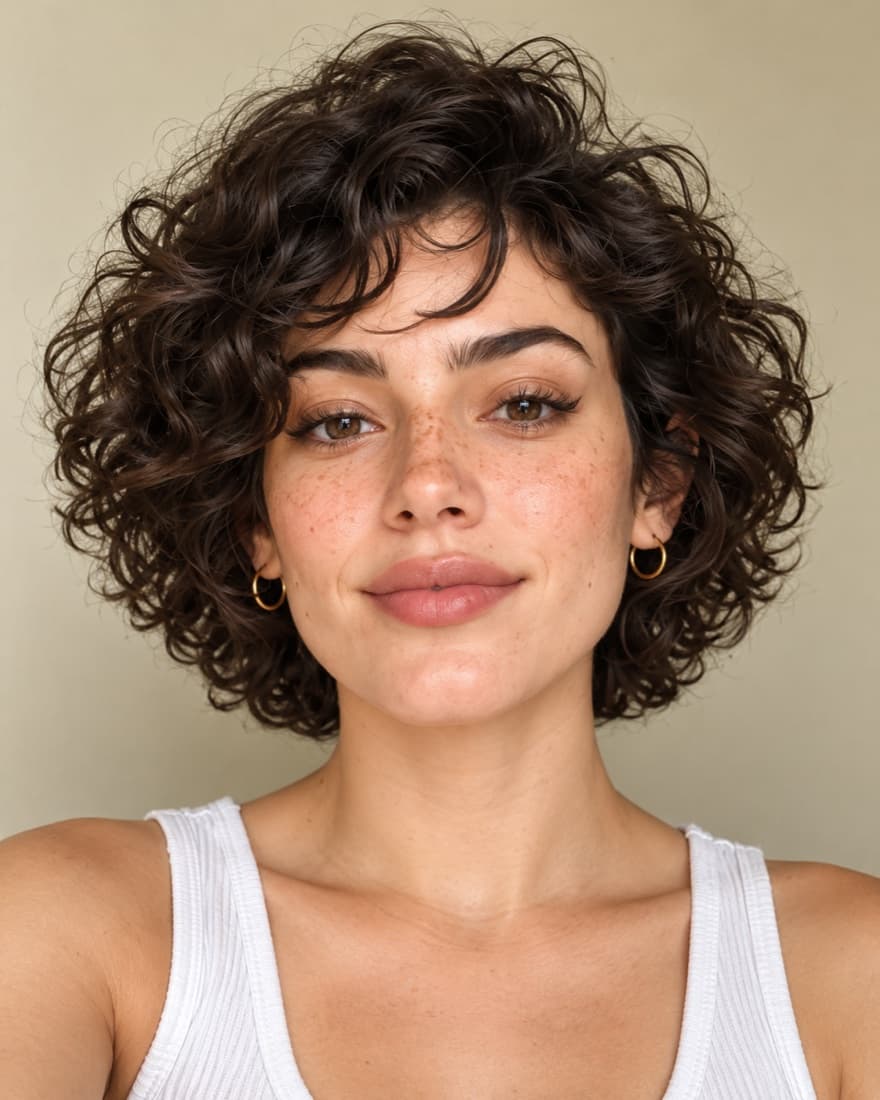
How do I get an honest face rating?
Start with the photo, because it moves the result more than most features do. Hold the camera at eye level and at arm’s length or further, face a window, relax your face, remove glasses and filters, and take two or three shots. Then choose a tool that is open about its method: it should say what it measures, what it compares you with, and give the same number if you upload the same photo again. FaceTwin is built that way. It places 68 landmarks in your browser, scores symmetry, golden-ratio proportions, facial thirds, canthal tilt and jaw angle, and reports a 1–10 score with a percentile against 1,196 reference faces (median 7.2). Finally, read the number as a range across your photos, not a verdict. Scores are entertainment and not a measure of worth, and are meant for adults using their own photo.
- Fix the photo first
- Use a tool with stated method and reference set
- Repeat, and read a range
- FaceTwin: free, no upload
How to use it
- Upload a selfie or take one: a front-facing, well-lit photo of yourself, no glasses, neutral expression.
- Wait a few seconds: the face model finds 68 landmarks in your browser; the photo is not uploaded.
- Read your 1–10 score and the six explained measurements.
- Try two more photos and average them for a steadier result.
Related
Step 1: take the fair photo
- Eye level, phone vertical, as far away as your arm allows; zoom in rather than move closer. Close wide-angle shots exaggerate the nose and shrink the sides of the face.
- Soft light from the front, such as a window. Avoid overhead light and harsh side shadows.
- Head straight, ears visible if possible, hair off the forehead, mouth closed and neutral.
- No filter, beauty mode or portrait blur. They move landmarks.
- Take three photos so you can see the spread.
Step 2: choose a tool that earns trust
| Check | Why it matters | FaceTwin |
|---|---|---|
| Same photo, same score | Rules out random variation | Yes: fixed formula |
| Method stated | Lets you judge what the number covers | 68 landmarks, 5 weighted proportions |
| Reference set stated | Gives the number a meaning | 1,196 faces; median 7.2, p10 6.4, p90 8.0 |
| Photo handling | Privacy of your face | Computed in your browser, not uploaded |
| Price and sign-up | Avoids pay-to-see-the-result | Free, no sign-up |
Be wary of tools whose score appears only after a subscription prompt, or that never explain the number. A paywalled score is a product, and products are tuned to keep you coming back.
Step 3: read the result honestly
The percentile matters more than the raw number. In our reference set, a score near 7.2 is the middle, 6.4 is around the 10th percentile and 8.0 around the 90th. Because the spread is narrow, a difference of 0.2 is small. Look at the six individual insights next: symmetry, canthal tilt in degrees, jaw angle and thirds tell you what drove the number, and each depends on the photo.
Compare your three photos. If they range from 6.9 to 7.5, your honest answer is “about 7.2, give or take”. If one outlier is much higher, the angle, not you, is the reason.
What an honest rating still cannot tell you
It cannot tell you how people see you in person. Voice, expression, humor, grooming and style carry more weight than geometry, and one frozen photo captures little of them. It also does not account for the parts of the face a landmark model cannot see, such as skin, and FaceTwin estimates forehead height rather than measuring it. Use the number for what it is: a repeatable look at proportions, good for comparing your own photos and haircuts. If you are feeling low about your appearance, skip the scoring and talk to someone you trust.
Frequently asked questions
Why do friends and apps flatter me?
Friends are kind, and many apps are tuned to be encouraging so you keep using them. A repeatable, measured score with a stated reference set flatters less.
Is a harsh rating more honest?
No. Honest means consistent and transparent, not severe.
How many photos should I test?
Three, taken a minute apart. Report the range.
Should I ask ChatGPT for a brutal rating?
Tone changes, accuracy does not. Ask for reasons and a range; see our ChatGPT prompt page.
Can I trust a rating if I smile?
Smiling changes landmark positions around the mouth and eyes. For comparison, use a neutral expression every time.
Is this suitable for under 18s?
No. FaceTwin face rating is for adults, using their own photo.
Is my photo uploaded?
Not for local lookalikes or face analysis: the model runs in your browser, so your selfie, landmarks and descriptor stay on your device. AI portraits, including the first free one, and full reports send your photo through our server to the AI provider after a free first-portrait request or a credit purchase, and separate upload consent. Reports also send your numeric measurements. FaceTwin does not save the original photo; it is discarded from request memory after processing.
More from the same selfie
Related by topic
Asking AI to rate your face
The data behind the scores: FaceTwin facts · face shape statistics
Last updated 2026-10-18. FaceTwin is for entertainment and is not identity recognition, medical or cosmetic advice.