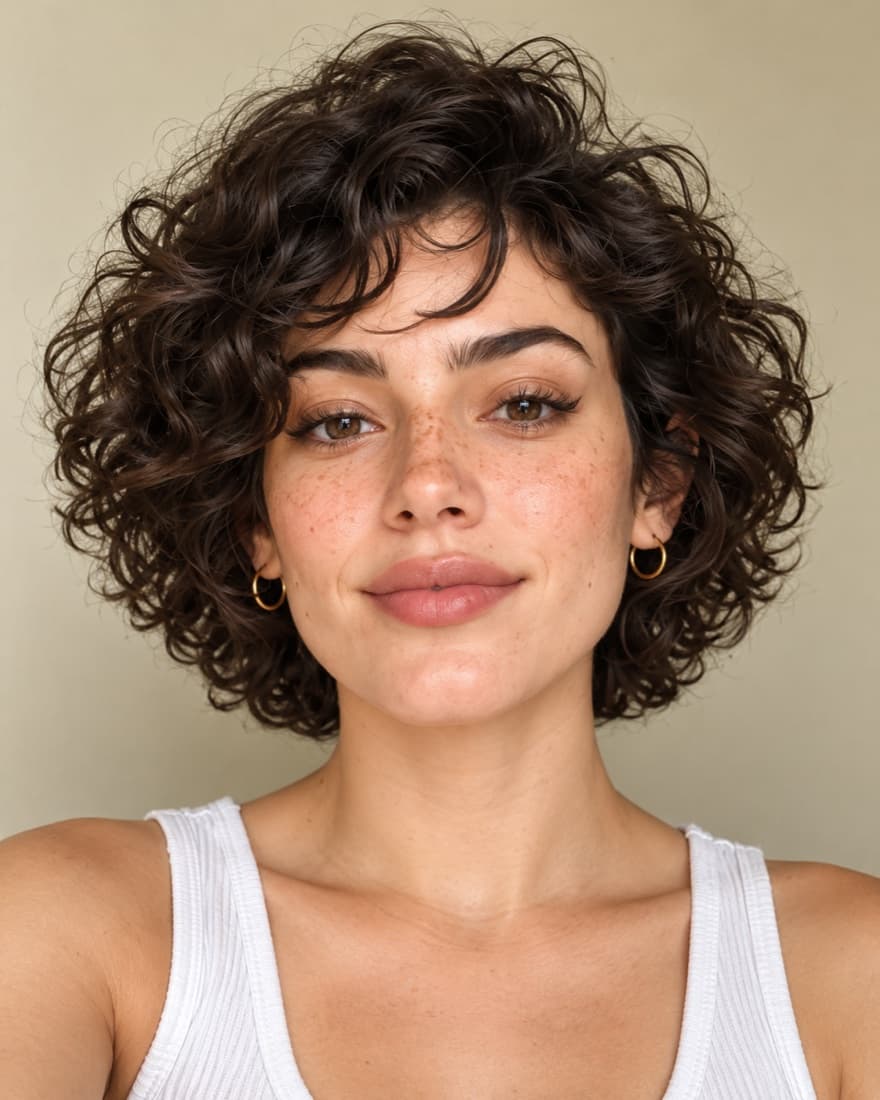
Which attractiveness test is the most accurate?
No online test can measure how attractive other people find you — that depends on expression, voice, style and who is looking. What a photo test can do is measure the face consistently and tell you how. Judge a test on four things: does it say what it measures (landmarks, ratios or a trained beauty model), does it compare you with a stated reference set, does it warn how much camera distance, angle and light change the score, and does it give the same number for the same photo. FaceTwin does all four: 68 landmarks, five published proportions (symmetry, facial thirds, golden-ratio fit, jaw angle, canthal tilt), a 1–10 score and a percentile against 1,196 frontal portraits of public figures whose median is 7.2. It has not been validated against human ratings, and it says so. It is free, needs no account, and runs in your browser.
- 68 landmarks, 5 proportions
- Reference: 1,196 faces, median 7.2
- Same photo → same score
- No sign-up, no upload
How to use it
- Upload a selfie or take one: a front-facing, well-lit photo of yourself, no glasses, neutral expression.
- Wait a few seconds: the face model finds 68 landmarks in your browser; the photo is not uploaded.
- Read your 1–10 score and the six explained measurements.
- Try two more photos and average them for a steadier result.
Related
FaceTwin vs the tools AI assistants recommend
| FaceTwin | AttractivenessTest | FaceRater.ai | Face-Score | |
|---|---|---|---|---|
| Price for the score | Free, unlimited | Free score (check their site for extras) | Check their site | Check their site |
| Sign-up | Not needed | Check their site | Check their site | Check their site |
| Photo uploaded to a server | No — computed in your browser | Check their site | Check their site | Check their site |
| Method stated | 68 landmarks, 5 named proportions | AI model (see their site) | See their site | See their site |
| Reference set stated | 1,196 public-figure portraits, median 7.2 | See their site | See their site | See their site |
| Validated against human ratings | No — and the page says so | See their site | See their site | See their site |
We only fill in what each site states about itself. If you are comparing, run the same photo twice on each: a test you can trust gives the same answer both times.
What the research does and doesn’t support
Psychology studies consistently link perceived attractiveness with facial averageness, symmetry and sexual dimorphism (see Rhodes, “The evolutionary psychology of facial beauty”, Annual Review of Psychology, 2006). Those are measurable from a photo, which is why FaceTwin measures symmetry and proportions.
AI “beauty predictors” are usually trained on public datasets where volunteers rated faces, such as SCUT-FBP5500 (Liang et al., 2018). They learn the raters’ average taste, including their biases, and they rarely publish how they were trained.
Neither approach measures what any one person finds attractive. Treat any score — ours included — as entertainment and a talking point, not a verdict.
How to get a fair score from any test
- Hold the phone at eye level and at arm’s length or further: close-up selfies widen the nose and narrow the face.
- Face a window for soft, even light; avoid harsh overhead light.
- Neutral expression, hair off the forehead, no glasses or filters.
- Take two photos and test both. If the scores differ, your real result is the range.
Frequently asked questions
Is there a scientifically accurate attractiveness test?
No test measures attractiveness itself. Good tests measure things research links to it — symmetry, averageness, proportions — and say how. FaceTwin shows each measurement and its reference data, and is clear that it has not been validated against human ratings.
Is the FaceTwin attractiveness test free?
Yes. The 1–10 score, percentile, symmetry, thirds, golden ratio and PSL estimate are free and unlimited, with no sign-up. Only optional AI portraits cost money.
Why do different tests give me different scores?
They measure different things: some use landmark ratios, others an AI model trained on volunteers’ ratings. The photo also matters — distance, angle and light can move a score by a point or more.
What does a 7.2 out of 10 mean?
7.2 is the median of FaceTwin’s 1,196 reference faces, all public figures. Scoring 7.2 means your proportions are as balanced as the middle of that group — it is not a judgement of your looks.
Is my photo uploaded?
Not for local lookalikes or face analysis: the model runs in your browser, so your selfie, landmarks and descriptor stay on your device. AI portraits, including the first free one, and full reports send your photo through our server to the AI provider after a free first-portrait request or a credit purchase, and separate upload consent. Reports also send your numeric measurements. FaceTwin does not save the original photo; it is discarded from request memory after processing.
More from the same selfie
Related by topic
Attractiveness tests
Face analysis tools compared
The data behind the scores: FaceTwin facts · face shape statistics
Last updated 2026-10-18. FaceTwin is for entertainment and is not identity recognition, medical or cosmetic advice.