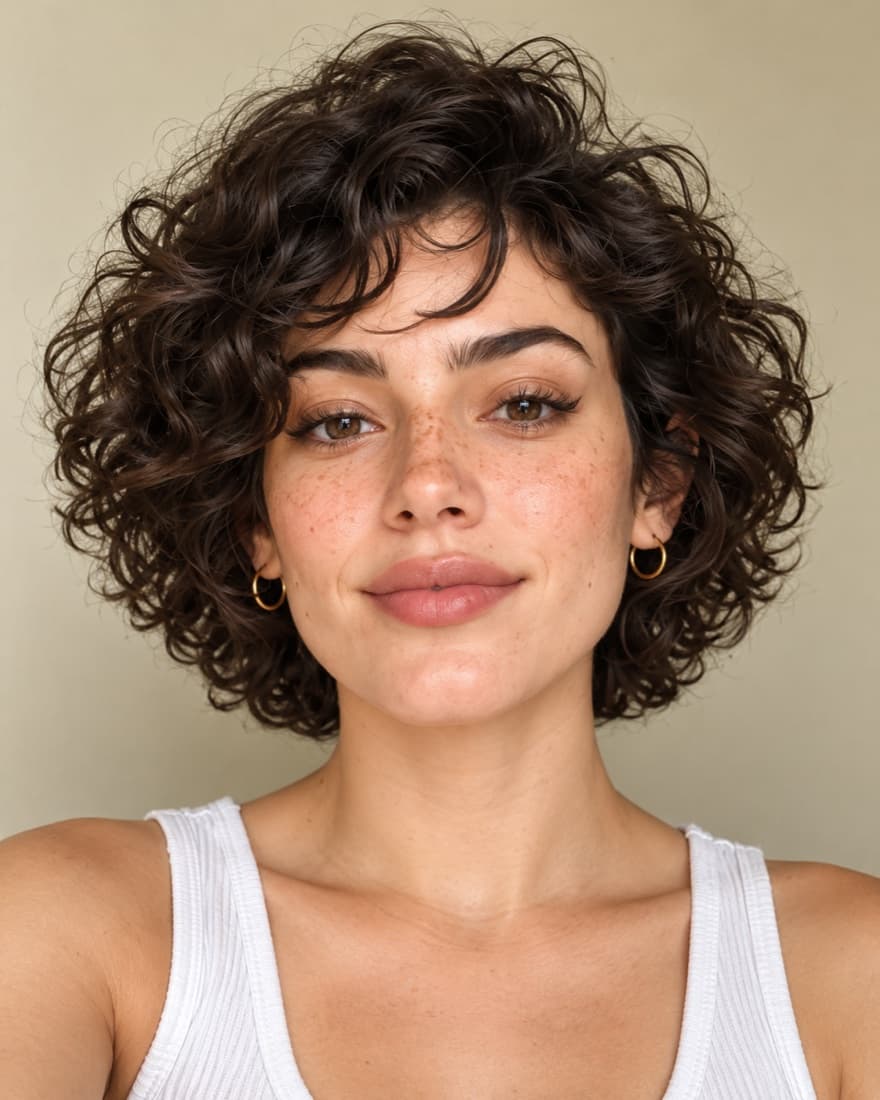
Is AI face rating accurate?
It depends on what you mean by accurate. If you mean “does it tell me how attractive people find me”, no tool can promise that: perceived attractiveness depends on expression, voice, style, culture and who is looking, and a single photo captures a fraction of it. If you mean “is it consistent and honest about what it measures”, some tools are and some are not. A trustworthy face rater states its method, such as landmark geometry or a trained beauty model, names its reference set, gives the same score for the same photo and warns that angle, lens distance and light change the result. FaceTwin follows that approach: 68 landmarks, five weighted proportions, a percentile against 1,196 reference faces and the same output on every run. It does not validate its score against human ratings, and says so. Use any rater for fun and for comparing your own photos.
- Attractiveness itself cannot be verified
- Check repeatability, method, reference set
- FaceTwin: 68 landmarks, 1,196 reference faces
- Does not claim validation against human ratings
How to use it
- Upload a selfie or take one: a front-facing, well-lit photo of yourself, no glasses, neutral expression.
- Wait a few seconds: the face model finds 68 landmarks in your browser; the photo is not uploaded.
- Read your 1–10 score and the six explained measurements.
- Try two more photos and average them for a steadier result.
Related
What accuracy can and cannot mean
There is no ground truth for “attractiveness”. Studies of perceived beauty collect ratings from people, and those ratings vary with the raters and the setting. A tool trained to predict such ratings is accurate only about the group that rated its training photos. A tool that measures geometry is accurate about the geometry and silent about everything else. Both can be useful, provided they say which one they are.
So rather than asking whether a rater is correct, ask whether it is reliable and transparent. Those are properties you can test in a minute.
A five-point checklist
- Repeatability: upload the same photo twice. The score should not move.
- Photo sensitivity: take two photos a minute apart, one from arm’s length and one from close up. A large swing means the tool mostly reads the camera.
- Method: does it say what it measures (landmarks, ratios, a trained model)?
- Reference: does it say what it compares you with, and how many faces?
- Honesty: does it say the score is entertainment and not a measure of worth?
Run this on FaceTwin, on any app you use and on a chatbot. The differences are informative.
Why two apps disagree
| Source of difference | Effect |
|---|---|
| Different method | A landmark formula and a trained beauty model weigh features differently |
| Different scale and reference | 6/10 in one tool and 60/100 in another may mean different things |
| Photo conditions | Lens distance, angle and light change measured proportions |
| Random variation | Generative chat models can answer differently each time |
| Tuning | Some apps are tuned to be flattering to keep you engaged |
That last row deserves a pause. A product that earns money from your next scan has a reason to keep you hopeful. A free tool that runs in your browser has less reason to inflate.
What FaceTwin does, and does not, claim
The score combines symmetry across 26 mirrored landmark pairs (30%), seven golden-ratio checks (20%), facial thirds (20%), canthal tilt (15%) and jaw angle (15%). In our reference set of 1,196 faces the median is 7.2 (10th percentile 6.4, 90th percentile 8.0). The photo is processed in your browser and never uploaded. The weights are our own choice, they have not been validated against human ratings, and the forehead is estimated because the model has no hairline point. Those limits are why the right use is comparing your own photos and haircuts, not ranking people.
Adults only, own photo only, entertainment only.
Frequently asked questions
Can AI really tell if I’m attractive?
No. It can measure proportions or predict ratings from a training set, but perceived attractiveness depends on people and context.
Which AI face rating is the most accurate?
No tool can prove accuracy. Prefer the one that shows its method, states a reference set and gives the same score twice. See our page on the most accurate attractiveness test.
Why did my score change when I retook the photo?
Lens distance, head tilt, expression and light all change measured proportions. That is a feature of photos, not a failure of the tool.
Is a landmark-based score better than an AI model?
It is easier to check because you can see the points. A trained model may capture more, but you cannot easily inspect it. Neither measures worth.
Do these tools keep my photo?
Read each privacy policy. FaceTwin’s free rating is computed in your browser, so the photo is not uploaded.
Should I use a face rating to decide anything?
Use it for curiosity. Do not use it for medical, cosmetic or self-worth decisions.
Is my photo uploaded?
Not for local lookalikes or face analysis: the model runs in your browser, so your selfie, landmarks and descriptor stay on your device. AI portraits, including the first free one, and full reports send your photo through our server to the AI provider after a free first-portrait request or a credit purchase, and separate upload consent. Reports also send your numeric measurements. FaceTwin does not save the original photo; it is discarded from request memory after processing.
More from the same selfie
Related by topic
Asking AI to rate your face
The data behind the scores: FaceTwin facts · face shape statistics
Last updated 2026-10-18. FaceTwin is for entertainment and is not identity recognition, medical or cosmetic advice.