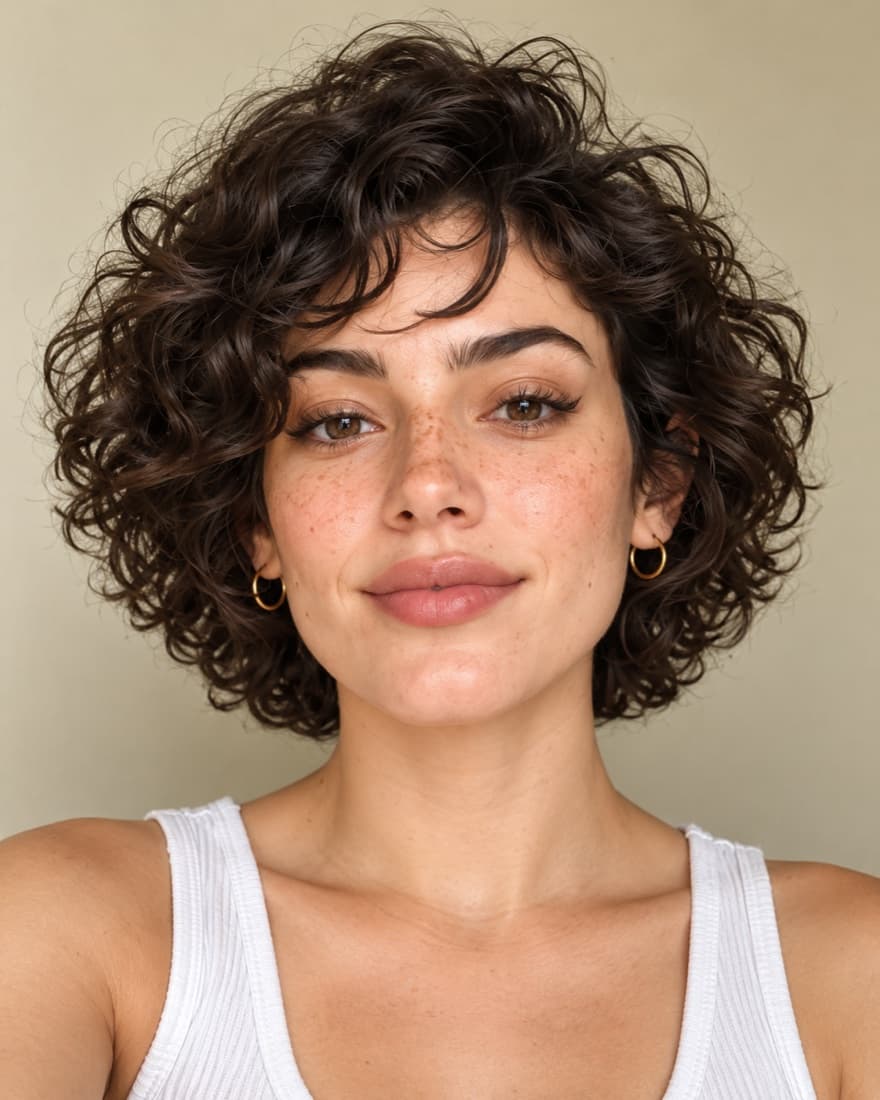
What is facial harmony and how is it measured?
Short answer: Facial harmony is how well features fit together. FaceTwin’s free test measures symmetry (30%), golden ratio (20%), facial thirds (20%), canthal tilt (15%) and jaw angle (15%) on one selfie and combines them into a 1–10 score; the median of 1,196 faces is 7.2. It runs in your browser. Entertainment, not a measure of worth.
Facial harmony is the idea that a face looks balanced when its features relate well to each other, rather than any one feature being “perfect”. It cannot be measured directly, so a test breaks it into parts that can. FaceTwin measures five: symmetry across 26 mirrored landmark pairs, golden-ratio proportions across seven ratios, the balance of the middle and lower facial thirds, the canthal tilt of the eyes, and the angle of the jaw. These are combined into a 1–10 score with fixed weights — symmetry 30%, golden ratio 20%, thirds 20%, tilt 15% and jaw 15% — and each trait is compared with the median of 1,196 reference faces, where the overall median is 7.2. Harmony is about the mix: a strong trait often balances a weaker one. The test runs in your browser and is entertainment, not a measure of worth.
- 5 traits combined into a 1–10 score
- Weights 30/20/20/15/15
- Median 7.2; middle 80% 6.4–8.0
- Runs in your browser, nothing uploaded
How to use it
- Upload a selfie or take one: a front-facing, well-lit photo of yourself, no glasses, neutral expression.
- Wait a few seconds: the face model finds 68 landmarks in your browser; the photo is not uploaded.
- Read your 1–10 score and the six explained measurements.
- Try two more photos and average them for a steadier result.
Measure each part of facial harmony
The five parts of facial harmony
| Part | Weight | What “harmonious” looks like | Typical in 1,196 faces |
|---|---|---|---|
| Symmetry | 30% | Left and right sides mirror each other closely | Median 79% |
| Golden ratio | 20% | Seven ratios close to 1.618 or 1:1 | Median score 77 |
| Facial thirds | 20% | Middle and lower thirds of similar height | Median score 75 |
| Canthal tilt | 15% | Outer eye corners level with or slightly above the inner corners | Median +3.5° |
| Jaw angle | 15% | A jaw corner near 143°, neither very sharp nor very soft | Median 145.9° |
Symmetry carries the most weight because it is the most researched part of facial balance. The weights are fixed and published, so the same photo always gives the same score.
Why harmony is more than one perfect feature
Ask people what makes a face attractive and they rarely name a single feature. Harmony is how features relate: wide-set eyes can balance a broad jaw, and a longer lower third can look balanced with fuller brows. That is why FaceTwin shows every trait instead of a single verdict. In the reference set only 17% of faces have symmetry above 90%, yet far more score above the median overall — strong proportions or a balanced jaw make up for it.
- Look for your two strongest traits; they usually define how your face reads.
- A low score in tilt or jaw is often the camera angle — retake at eye level before reading anything into it.
- Face shape is shown too, but it is descriptive: no shape is more harmonious than another.
How to read your harmony score
| Score | Meaning in context |
|---|---|
| 8.0+ | Top 10% of the reference set — very balanced proportions |
| 7.2–7.9 | Above the median of the reference faces |
| 6.4–7.1 | Within the middle 80% |
| Below 6.4 | Bottom 10% — retake with even light and a straight angle first |
The reference faces are professionally photographed public figures, so their median is a high bar. Your score is a reading of one photo, not of you.
Take a fair facial harmony test
- Use a sharp, front-facing photo at eye level, in even daylight.
- Keep a relaxed, closed-mouth expression; a big smile changes the lower third and the jaw angle.
- Make sure the brows, eye corners and jawline are visible.
- Compare two or three photos and trust what repeats.
Facial harmony tests compared
| FaceTwin | Typical “harmony” app | |
|---|---|---|
| Method | Five measured traits with published weights | A single score, method not shown |
| Context | Each trait compared with 1,196 faces | None |
| Photo | Stays in your browser | Uploaded |
| Price | Free | Free preview, full report paid |
It is for adults using their own photo. It is entertainment, not a measure of worth, and it never compares groups of people.
Frequently asked questions
What is facial harmony?
Facial harmony is how well the features of a face relate to each other — symmetry, proportions and balance between the upper and lower face — rather than how any single feature looks.
Is the facial harmony test free?
Yes. The score, all five traits and the explanations are free, with no sign-up and no ads.
Does it upload my selfie?
No. Every measurement is made in your browser and the photo never leaves your device.
What is a good facial harmony score?
The median across 1,196 reference faces is 7.2, and the middle 80% fall between 6.4 and 8.0. Those faces are professionally photographed, so being near the median is a strong result.
Can facial harmony be improved?
The bone structure is what it is, but photos change a lot: eye-level angles, even light and a relaxed expression often raise the measured score. Hair, brows and glasses also change how balanced a face looks in person.
Is my photo uploaded?
Not for local lookalikes or face analysis: the model runs in your browser, so your selfie, landmarks and descriptor stay on your device. AI portraits, including the first free one, and full reports send your photo through our server to the AI provider after a free first-portrait request or a credit purchase, and separate upload consent. Reports also send your numeric measurements. FaceTwin does not save the original photo; it is discarded from request memory after processing.
More from the same selfie
Related by topic
Face proportions
The data behind the scores: FaceTwin facts · face shape statistics
Last updated 2026-10-18. FaceTwin is for entertainment and is not identity recognition, medical or cosmetic advice.