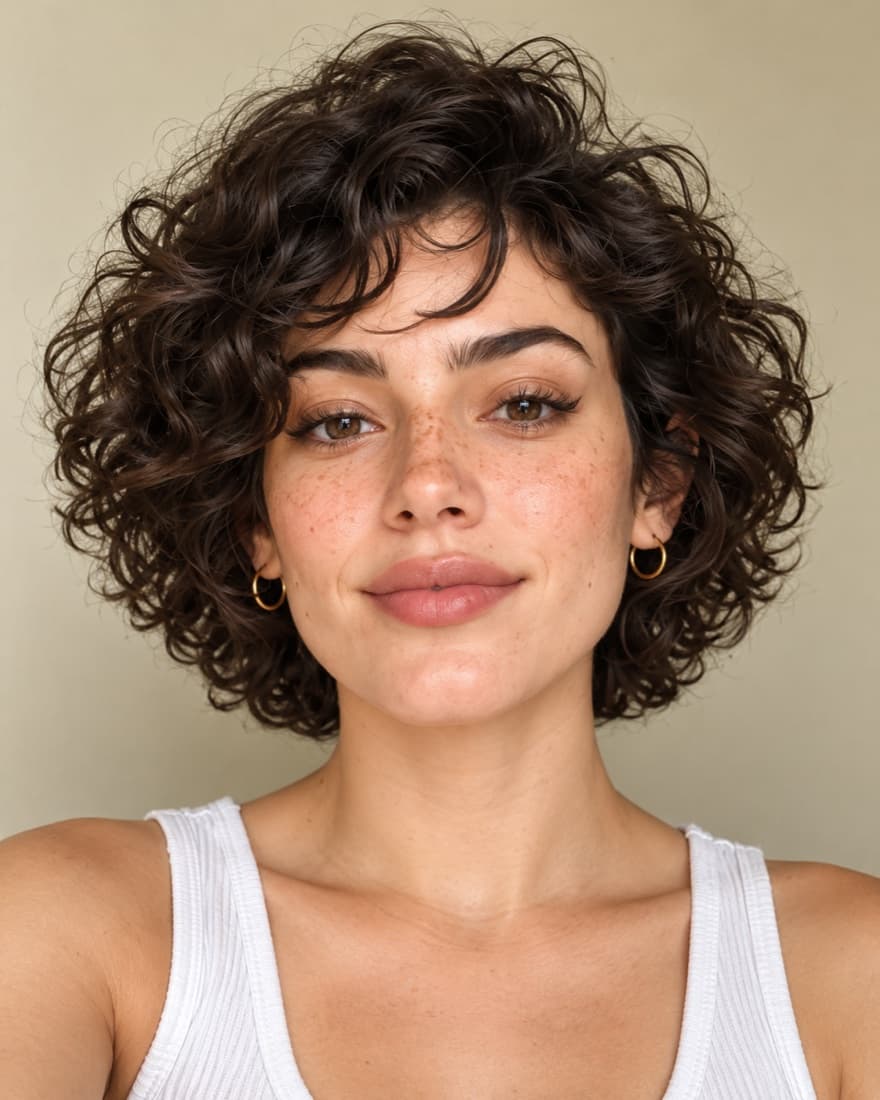
How do you calculate canthal tilt?
Short answer: A canthal tilt calculator measures the angle from the inner to the outer eye corner against the horizontal. FaceTwin levels your head, measures both eyes from one selfie and averages them: 5° or more is positive, under 1° negative, otherwise neutral. The median of 1,196 faces is +3.5°. Free, and the photo never leaves your device.
Canthal tilt is the angle of the line from the inner corner of the eye to the outer corner, measured against a horizontal line. If the outer corner sits higher, the angle is positive; if it sits lower, it is negative. FaceTwin calculates it for you: a face model places 68 landmarks on your selfie in your browser, corrects for head roll so a tilted phone does not skew the result, measures the angle of each eye in degrees and averages the two. It labels 5° or more as positive, under 1° as negative and everything between as neutral. In 1,196 reference faces of public figures the median was +3.5°: 70.2% were neutral, 20.5% positive and 9.4% negative. Tilt is a small part of how a face looks, and nothing about it is a measure of worth.
- Inner → outer corner angle vs horizontal
- Positive ≥5° · neutral 1–5° · negative <1°
- Median +3.5° in 1,196 faces
- Head roll corrected, on-device
How to use it
- Upload a selfie or take one: a front-facing, well-lit photo of yourself, no glasses, neutral expression.
- Wait a few seconds: the face model finds 68 landmarks in your browser; the photo is not uploaded.
- Read your 1–10 score and the six explained measurements.
- Try two more photos and average them for a steadier result.
Canthal tilt guides
The canthal tilt formula
The calculation is simple trigonometry once the eye corners are found. For each eye, take the inner corner (medial canthus) and the outer corner (lateral canthus), draw a line between them and measure its angle against the horizontal:
- Find the corners: landmark points mark the inner and outer corner of each eye.
- Level the face: the whole set of landmarks is rotated so the line between the eyes is horizontal, removing head roll.
- Measure each eye: angle = arctangent of (vertical rise of the outer corner ÷ horizontal distance between corners), in degrees.
- Average both eyes and round to one decimal.
- Label it: 5° or more is positive, under 1° negative, anything in between neutral.
Measuring by hand on a printed photo works the same way with a ruler and protractor, but small errors in where you place the corners change the result by a degree or two. Landmarks are consistent from photo to photo.
What your number means
| Canthal tilt | Label | Share of 1,196 faces | Women | Men |
|---|---|---|---|---|
| 5° or more | Positive (upturned outer corners) | 20.5% | 27.8% | 14.6% |
| 1° to under 5° | Neutral (level) | 70.2% | 66.9% | 72.9% |
| Under 1° | Negative (downturned outer corners) | 9.4% | 5.4% | 12.5% |
The median face had a tilt of +3.5° (women +4°, men +3°). A slightly positive angle is the normal resting position of most eyes, which is why “neutral” covers the range from 1° to 5° rather than exactly zero.
How canthal tilt feeds the face score
Canthal tilt is 15% of FaceTwin’s 1–10 proportions score. The tilt sub-score starts at 70 for a perfectly level eye and changes by 5 points per degree, capped between 35 and 100:
| Tilt | Tilt sub-score (0–100) |
|---|---|
| −7° or lower | 35 (floor) |
| 0° | 70 |
| +3.5° (median) | about 88 |
| +6° or higher | 100 (cap) |
Because the weight is 15%, the full swing from the floor to the cap moves the 1–10 score by well under one point. Symmetry, at 30%, matters about twice as much.
Getting an accurate reading
- Look straight at the camera with a relaxed face. Smiling lifts the lower lids and squinting changes the outer corners.
- Keep the phone at eye level. Shooting from below or above shifts the apparent corners.
- Use even light; deep shadows at the outer corners can move the landmark.
- Heavy winged eyeliner can be read as part of the eye and add a degree or two of positive tilt.
- Compare two or three photos; a difference of one degree between photos is normal.
Canthal tilt calculator vs other checkers
- Gives the angle in degrees, not just a label.
- Corrects head roll automatically, the most common source of wrong readings.
- Keeps your photo on your device; many checkers upload it.
- Shows how common your result is, measured on 1,196 faces rather than guessed.
- The same upload also measures symmetry, golden ratio, facial thirds, jaw angle and face shape.
Positive, neutral or negative: what each looks like
- Positive (5° or more): the outer corners sit visibly higher than the inner corners, giving an upswept eye line. More common among the women in our set (27.8%) than the men (14.6%).
- Neutral (1° to under 5°): the eye line is close to level with a slight upward slope. This is what most eyes look like — 70.2% of reference faces.
- Negative (under 1°): the outer corners sit level with or below the inner corners, giving a softer, downturned line. Seen in 12.5% of men and 5.4% of women in our set.
Each label has its own guide: see positive canthal tilt and negative canthal tilt for plain descriptions and what changes how each looks.
What canthal tilt can’t tell you
Online looks forums treat tilt as a big deal, especially under the label “hunter eyes”. In practice it is one small angle. Eye shape, lid exposure, brows, expression and skin all affect how eyes look far more than a degree or two. Tilt also changes with age and expression, and it differs between the left and right eye in most people.
FaceTwin is for adults measuring their own photo, for curiosity. It gives no medical or cosmetic advice; anyone considering procedures should talk to a qualified doctor. A downturned or level eye is common and normal, and no measurement is a measure of worth.
Frequently asked questions
What is a normal canthal tilt?
Slightly positive. The median in our 1,196 reference faces was +3.5°, and 70.2% fell in the neutral range from 1° to under 5°.
What counts as a positive canthal tilt?
On FaceTwin, 5° or more. 20.5% of reference faces reached it: 27.8% of women and 14.6% of men.
What counts as a negative canthal tilt?
Under 1°, meaning the outer corner is level with or lower than the inner corner. 9.4% of reference faces were negative.
Is this a canthal tilt test or a calculator?
Both. It is a test in the sense of a quick check from a photo, and a calculator because it reports the exact angle in degrees for each eye’s average.
Can I measure canthal tilt by hand?
Yes: mark the inner and outer corners on a straight-on photo, draw the line and measure its angle against the horizontal with a protractor. Level the photo first, or head tilt will skew it.
Why are my two eyes different?
Almost everyone has some left–right difference. The calculator averages both eyes; the symmetry test shows how much they differ.
Does smiling change canthal tilt?
Yes. Smiling lifts the lower lids and can move the outer corners. Use a neutral expression for a comparable reading.
Can makeup change the result?
Winged eyeliner can be read as part of the eye and add positive tilt. Compare photos with the same makeup.
How much does tilt affect my face score?
It is 15% of the 1–10 proportions score. Going from the lowest to the highest tilt sub-score moves the 1–10 score by under one point.
Is a negative canthal tilt bad?
No. It is a normal variation seen in about one in ten reference faces, including many public figures. It is not a health issue and not a measure of worth.
Is my photo uploaded?
Not for local lookalikes or face analysis: the model runs in your browser, so your selfie, landmarks and descriptor stay on your device. AI portraits, including the first free one, and full reports send your photo through our server to the AI provider after a free first-portrait request or a credit purchase, and separate upload consent. Reports also send your numeric measurements. FaceTwin does not save the original photo; it is discarded from request memory after processing.
More from the same selfie
Related by topic
Eyes and canthal tilt
The data behind the scores: FaceTwin facts · face shape statistics
Last updated 2026-10-18. FaceTwin is for entertainment and is not identity recognition, medical or cosmetic advice.