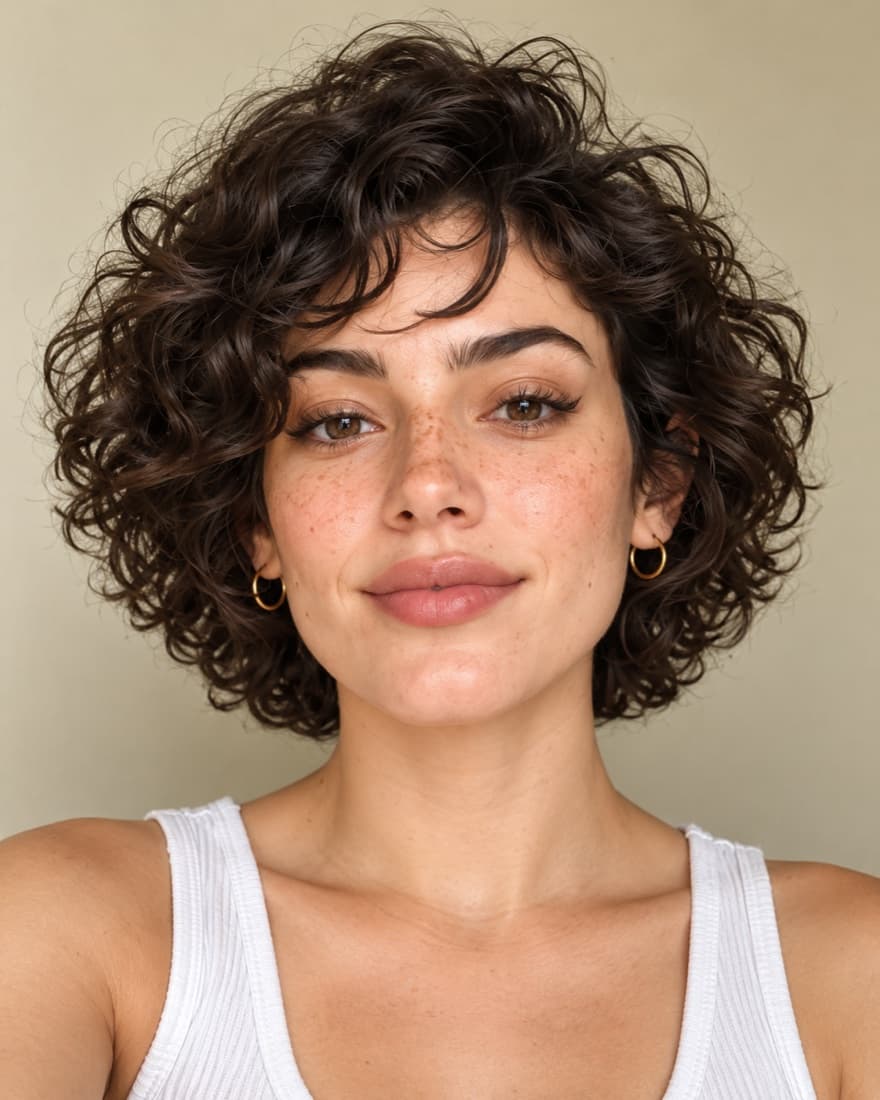
What are the facial fifths and how do you measure them?
The rule of fifths says the face is one eye-width wide five times over: the outer part of the face, one eye, the gap between the eyes, the other eye, and the other outer part, each about 20% of the width. FaceTwin measures these five horizontal widths from the 68 landmarks, as a share of the jaw-outline width at ear level. In our reference set of 1,196 faces the typical values are 20%, 16.6%, 26.9%, 16.7%, 19.7%. The gap between the eyes reads about 26.9% instead of 20% because the landmark eye corners sit slightly inside the visible corners, so the middle gap is always measured wider and each eye narrower. Compare yourself with the typical column, not with 20 for each part. Everything is computed in your browser.
- Typical: 20 · 16.6 · 26.9 · 16.7 · 19.7 (%)
- Eye gap reads ~26.9%, not 20%
- Five widths from 68 landmarks
- No upload, no sign-up
Related measurements
The rule of fifths in plain words
Portrait artists have long divided the face into thirds vertically and fifths horizontally. The horizontal rule says that the width of the face from ear to ear equals five eye-widths: from the left edge of the face to the left eye, the left eye itself, the space between the eyes, the right eye, and from the right eye to the right edge of the face. If every part were equal, each would be 20% of the width, and the gap between the eyes would be exactly one eye wide.
The rule is a drawing guide, not a law of anatomy. It is useful because it turns eye spacing into something you can see: a gap wider than one eye reads as wide-set, narrower reads as close-set. FaceTwin measures it directly so you do not have to hold a ruler to a screen.
| Part | Classical rule | Typical in 1,196 faces | Women | Men |
|---|---|---|---|---|
| Left side of face | 20% | 20% | 19.3% | 20.7% |
| Left eye | 20% | 16.6% | 16.9% | 16.3% |
| Gap between the eyes | 20% | 26.9% | 27.4% | 26.5% |
| Right eye | 20% | 16.7% | 17% | 16.4% |
| Right side of face | 20% | 19.7% | 19.3% | 20% |
Why the gap reads about 26.9% and not 20%
Most people who run a fifths test are surprised that the middle part comes out far larger than the others. This is a measurement effect, not a feature of your face. The 68-point landmark model places the eye-corner points a little inside the visible corners of the eyes, on the lid line. Each eye therefore measures narrower than it looks (about 16.6% instead of 20%) and the gap between the two inner points measures wider (about 26.9% instead of 20%). The two outer parts of the face come out near 20% because the jaw outline is not affected.
Every face we measured shows the same shift, so the useful comparison is your numbers against the typical column, not against 20. If your gap reads 24% you are narrower than typical; if it reads 30% you are wider.
| Your gap reading | How to read it |
|---|---|
| Clearly under the typical gap | Eyes sit closer together than usual in this photo |
| Close to the typical gap | Typical spacing, whatever the 20% rule says |
| Clearly over the typical gap | Eyes sit further apart than usual in this photo |
A second view of the same fact is the intercanthal ratio, the gap divided by the average eye width. In our reference set it is 1.619 at the median (middle half 1.599–1.638). The classical rule says 1.0; real landmark measurements sit well above it for the same reason.
How to get a clean reading
The fifths are horizontal, so head turn is the main enemy. A few degrees of rotation shrinks one side of the face and enlarges the other.
- Look straight at the lens with the head level. Both ears should be equally visible or equally hidden.
- Use arm’s length or further so the lens does not exaggerate the nose and inner face.
- Keep a relaxed face: squinting or a wide smile changes the eye width.
- Hair should not cover the sides of the face, otherwise the outline is guessed.
- Compare the left and right side values: if they differ by more than a couple of points, it is probably head turn, though a real asymmetry is also possible.
Entertainment, not a measure of worth. For adults, using your own photo.
What an uneven result can and cannot mean
Few faces split into equal parts, and that is normal. A wider outer part on one side usually reflects a slight head turn or hair covering the jaw outline. A narrow eye on one side may be a half-closed lid or a squint. A gap far from the typical column can reflect real spacing, but the nose bridge and brows shape how the spacing looks, which a width measurement does not capture.
If the left and right outer parts and the two eyes are each within a point or two of one another, your photo is straight and your face is symmetric in width. If not, retake the picture before drawing conclusions, and use the symmetry test for a fuller look.
Fifths, thirds and eye spacing: how they fit together
The fifths describe width, the thirds describe height, and the eye separation ratio compresses the eye-gap question into a single number: pupil distance divided by cheekbone width. All three come from the same 68 landmarks on this site.
- Facial thirds: how evenly the face divides vertically.
- Facial fifths: how the width divides, including the gap between the eyes.
- Eye separation ratio: one number for spacing, median 0.452 in our set.
If you only want to know whether your eyes are wide-set or close-set, the eye spacing calculator gives a direct answer. If you want the full picture of proportion, read the fifths and thirds together.
Frequently asked questions
Why isn't the gap between my eyes 20%?
The landmark eye corners sit slightly inside the visible corners, so the gap always measures wider (typically 26.9%) and each eye narrower. Compare with the typical column, not with 20%.
What are the five parts of the rule of fifths?
The outer left of the face, the left eye, the gap between the eyes, the right eye and the outer right of the face. The classical rule gives each one fifth of the face width.
Are the fifths an ideal I should aim for?
No. The rule is a drawing guide. Real faces vary, and FaceTwin shows the typical values so you can see where you sit, not to grade you.
Why do my left and right sides differ?
Head turn is the usual cause. Retake the photo facing the lens squarely. Small real differences between the two sides are normal; the symmetry test shows how large yours are.
What is the width the fifths are measured against?
The jaw-outline width at ear level, from the 68-point outline. The five parts are shown as percentages of it.
Is my photo uploaded?
Not for local lookalikes or face analysis: the model runs in your browser, so your selfie, landmarks and descriptor stay on your device. AI portraits, including the first free one, and full reports send your photo through our server to the AI provider after a free first-portrait request or a credit purchase, and separate upload consent. Reports also send your numeric measurements. FaceTwin does not save the original photo; it is discarded from request memory after processing.
More from the same selfie
Related by topic
Face proportions
The data behind the scores: FaceTwin facts · face shape statistics
Last updated 2026-10-18. FaceTwin is for entertainment and is not identity recognition, medical or cosmetic advice.