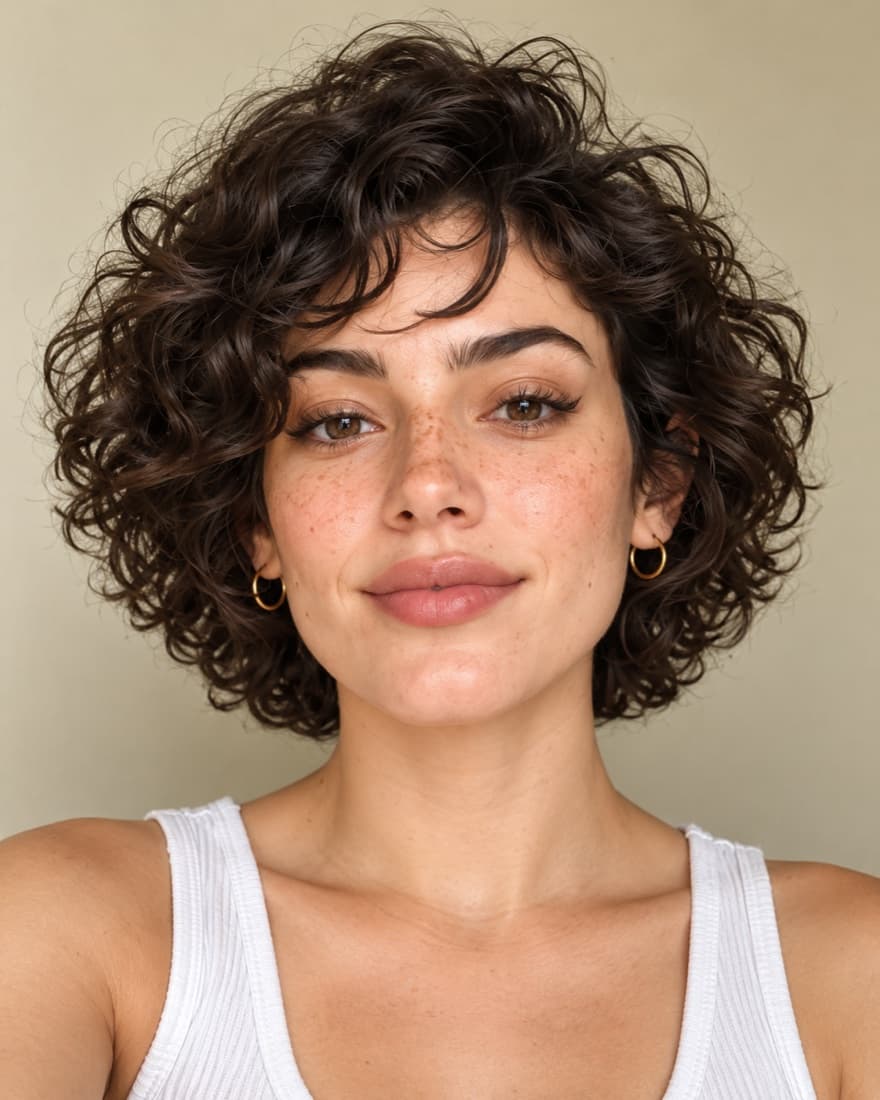
How do you calculate the midface ratio?
The midface ratio compares the width of the eye area with the height of the middle of the face. FaceTwin finds the pupil of each eye from the 68 landmarks, measures the distance between them (the interpupillary distance), and divides it by the vertical distance from the pupil line down to the upper lip. A value near 1 reads as a compact midface, a lower value as a longer midface. In our reference set of 1,196 faces the median is 1.049; women run higher (1.082) than men (1.014). The middle half of faces sit between 0.99 and 1.108. Definitions differ between sites, so compare your result with the range from this tool rather than a number quoted elsewhere. Everything is computed in your browser and the photo is never uploaded.
- Median 1.049 (women 1.082, men 1.014)
- Middle half: 0.99–1.108
- Pupil distance ÷ pupil-to-upper-lip height
- No upload, no sign-up
Related measurements
What the midface ratio is
The midface is the region between the eyes and the mouth. Forums and some papers describe it as “compact” when it is short compared with the width of the eye area, and “long” when it is tall. The midface ratio puts a number on that impression by dividing a horizontal distance (pupil to pupil) by a vertical one (pupil line to upper lip).
Because both distances come from the same photo, the ratio does not depend on image size or how far you stand. It does depend on the pose and lens, which is covered below.
| Part of the formula | FaceTwin landmark | Why this choice |
|---|---|---|
| Horizontal: pupil to pupil | Centre of each eye, from the eyelid points | Pupils are the traditional reference for eye spacing |
| Vertical: pupil line to upper lip | Average pupil height down to the upper-lip point | Gives the visible height of the middle of the face |
| Ratio | Horizontal ÷ vertical | Closer to 1 = compact; lower = longer |
Other websites use other endpoints, for example the vertical measured to the nose base, or the horizontal taken between the inner eye corners. Each gives a different number. That is why a result from another calculator cannot be compared with the ranges here.
Typical values in 1,196 faces
The midface ratio is the ratio in our set with the clearest difference between women and men: women measure higher on average, so a value that is typical for a man can read as lower for a woman. The panel above uses the combined range, and the table gives both.
| Group | 10th pct | 25th pct | Median | 75th pct | 90th pct |
|---|---|---|---|---|---|
| Everyone | 0.938 | 0.99 | 1.049 | 1.108 | 1.167 |
| Women | 0.992 | 1.036 | 1.082 | 1.135 | 1.185 |
| Men | 0.919 | 0.963 | 1.014 | 1.074 | 1.142 |
A value of exactly 1 is slightly below the median for women and slightly above it for men. Nothing about 1.0 is “correct”: it is the point where the pupil gap equals the height to the lip, which people tend to read as a compact face. Our reference faces are public figures photographed professionally, so treat the ranges as a comparison group rather than a population norm.
What changes your reading
The vertical distance is the unstable part. Anything that moves the upper lip or the eyes vertically in the image moves the ratio.
| Cause | Effect | What to do |
|---|---|---|
| Camera above eye level | Eyes-to-lip distance shortens, so the ratio rises | Hold the camera at eye level |
| Camera below eye level or chin raised | The distance lengthens, so the ratio falls | Keep the chin level |
| Smiling | The upper lip rises, so the distance shortens | Relaxed, closed mouth |
| Head turned | Horizontal pupil distance shrinks | Face the lens squarely |
| Wide-angle close-up | Distorts depth between eyes and mouth | Arm’s length or further |
A good test is to take five photos in a row, slightly varying the angle, and look at the spread. If it covers a tenth or more, treat the median of your shots as the better estimate.
Entertainment, not a measure of worth. For adults, using your own photo.
How to read the result
- Near or above the median: a compact midface in this photo.
- Between the 25th and 75th percentile (0.99–1.108 for everyone): typical.
- Below the 25th percentile (0.99): a longer midface than most reference faces.
- Compare with the women or men range above if that is more relevant to you.
The midface ratio is one of several numbers in the ratios panel. The same page shows FWHR, eye separation and the facial fifths so you can see how they relate: a longer midface usually also lowers the FWHR, because both share the vertical distance to the lip.
None of these figures predicts how attractive a face is. They describe proportion, and FaceTwin shows them so you can see your face as a set of measurements rather than as one verdict.
Midface ratio versus the thirds and FWHR
People often confuse the midface ratio with the middle third of the facial thirds. They are related but not the same. The thirds compare the height of the middle face with the height of the lower face, both vertical. The midface ratio compares one horizontal distance, the pupil gap, with one vertical distance, so it also reflects how wide-set the eyes are. Two people with the same midface height can therefore have different ratios if their eyes sit at different distances.
- Facial thirds: vertical against vertical, shows whether the middle or lower face is longer.
- Midface ratio: horizontal against vertical, shows how compact the eye-to-lip zone is.
- FWHR: cheekbone width against brow-to-lip height, the widest-picture version of the same idea.
Reading the three together is more informative than any one: a compact midface, a high FWHR and a short middle third usually go together in a photo, and a long midface tends to pull all three the other way.
Frequently asked questions
What is a good midface ratio?
There is no good or bad value. The median in our 1,196 reference faces is 1.049, with women at 1.082 and men at 1.014. The calculator tells you whether yours is typical, higher or lower.
Why is the ratio different for women and men?
In our reference set, women measure higher on average (median 1.082) than men (1.014). The panel compares you with the combined range and the page lists both.
Is a ratio of 1 the ideal?
No. A ratio of 1 means the pupil distance equals the height to the upper lip. Many people read that as compact, but it is not a standard of beauty and FaceTwin does not treat it as one.
Why does my midface ratio change between photos?
The vertical distance moves with camera height, chin angle and smiling. Take several photos under the same conditions and use the middle value.
Does it matter which tool I use?
Yes. Tools measure the vertical to different points, and some use inner eye corners for the horizontal. Compare your result only with ranges from the same tool.
Is my photo uploaded?
Not for local lookalikes or face analysis: the model runs in your browser, so your selfie, landmarks and descriptor stay on your device. AI portraits, including the first free one, and full reports send your photo through our server to the AI provider after a free first-portrait request or a credit purchase, and separate upload consent. Reports also send your numeric measurements. FaceTwin does not save the original photo; it is discarded from request memory after processing.
More from the same selfie
Related by topic
Face proportions
The data behind the scores: FaceTwin facts · face shape statistics
Last updated 2026-10-18. FaceTwin is for entertainment and is not identity recognition, medical or cosmetic advice.