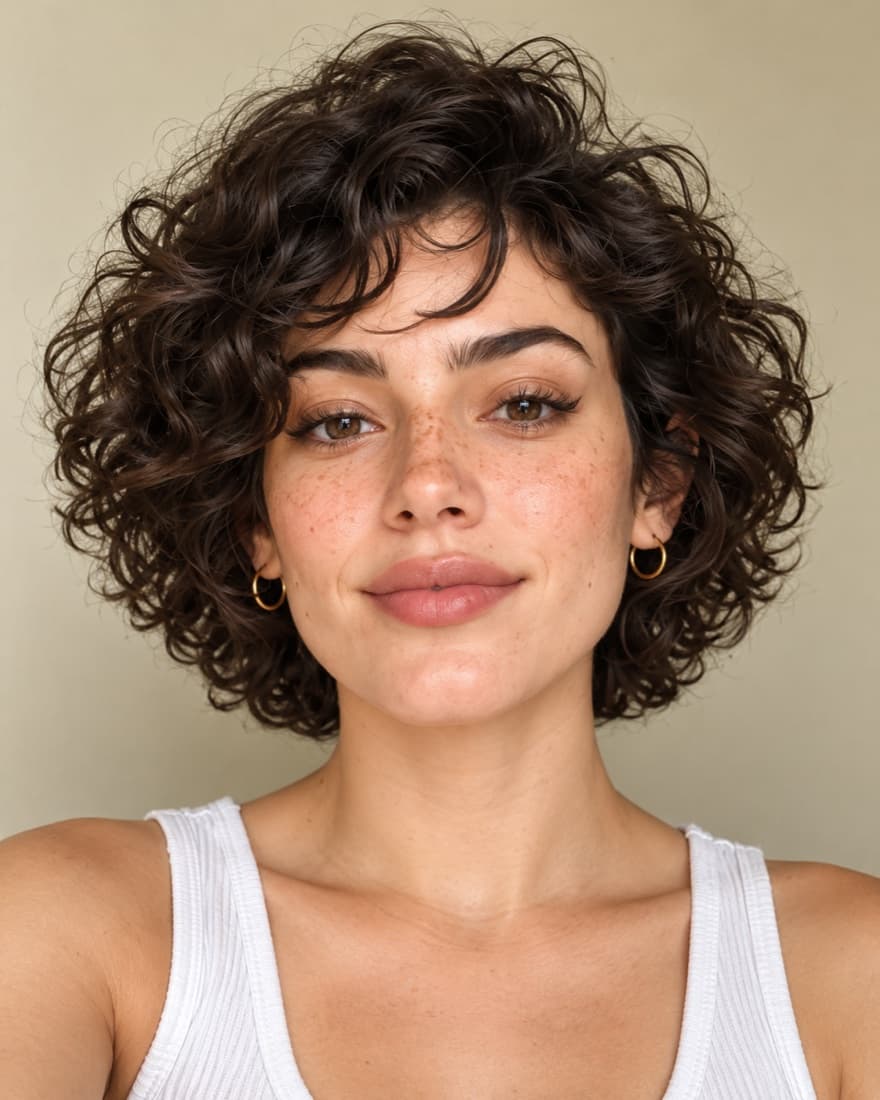
How do you test your jawline from a photo?
Short answer: FaceTwin’s free jawline test measures the angle at both jaw corners from one selfie: under 141° is defined, 141–150° balanced, over 150° soft. In 1,196 reference faces the median is 145.9° and 63.2% are balanced. It also shows the jaw-to-cheekbone ratio and face shape. The photo never leaves your browser.
A jawline test measures the angle where the jaw turns from the side of the face towards the chin. FaceTwin places 68 landmarks on your selfie and, on each side, measures the angle at the corner of the jaw between the point below the ear and the point near the chin; the two sides are averaged. A smaller angle means a sharper corner. Under 141° is labelled defined, 141–150° balanced and over 150° soft. In 1,196 reference faces the median is 145.9°: 18.3% are defined, 63.2% balanced and 18.5% soft. Men’s jaws in the set are slightly sharper on average (median 145.4°) than women’s (146.5°). The test also reports the jaw-to-cheekbone width ratio, which separates broad jaws from tapered ones, and your face shape. Everything runs in your browser; the photo is never uploaded.
- Defined <141°, balanced 141–150°, soft >150°
- Median 145.9° in 1,196 faces
- 63.2% balanced, 18.3% defined, 18.5% soft
- Measured on-device; nothing uploaded
How to use it
- Upload a selfie or take one: a front-facing, well-lit photo of yourself, no glasses, neutral expression.
- Wait a few seconds: the face model finds 68 landmarks in your browser; the photo is not uploaded.
- Read your 1–10 score and the six explained measurements.
- Try two more photos and average them for a steadier result.
Related face measurements
Jaw angle bands and how common they are
| Band | Jaw angle | All 1,196 faces | Women (540) | Men (646) |
|---|---|---|---|---|
| Defined | Under 141° | 18.3% | 15.9% | 20.1% |
| Balanced | 141–150° | 63.2% | 63.0% | 63.6% |
| Soft | Over 150° | 18.5% | 21.1% | 16.3% |
| Median | — | 145.9° | 146.5° | 145.4° |
Most faces — almost two in three — fall in the balanced band. The difference between men and women in the reference set is about one degree at the median, far smaller than the spread within each group.
How the jaw angle is measured
- The model finds 68 landmarks; 17 of them trace the jawline from ear to ear.
- On each side, it takes three points: one below the ear, the corner of the jaw and one towards the chin.
- It measures the angle at the corner point on both sides and averages them, so a slight head turn affects the result less.
- The average is placed in a band and scored: 143° scores highest, and the score falls by two points per degree away from it.
The jaw counts for 15% of FaceTwin’s 1–10 proportions score. The band label is descriptive: a soft jaw is as common as a defined one and is not a flaw.
Jaw width: the other half of a jawline
Angle alone does not describe a jawline. The jaw-to-cheekbone width ratio tells you whether the jaw is broad or tapered. High values mean the jaw is almost as wide as the cheekbones, typical of square and round faces; low values mean it narrows, typical of heart and diamond faces. In the reference set the brow and jaw widths are usually close — 81.5% of faces have them within 5% of each other.
| Jaw angle + width | Usually reads as |
|---|---|
| Defined angle, broad jaw | Square, angular jawline |
| Balanced angle, medium width | Oval — the most common shape (52%) |
| Soft angle, broad jaw | Round |
| Any angle, narrow jaw | Heart or diamond |
Why your jawline test changes between photos
- Chin up or down. Lifting the chin opens the jaw angle by several degrees; dropping it closes it. Keep the camera at eye level.
- Lens distance. Close selfies widen the lower face. Shoot from arm’s length or further.
- Hair and beards. Hair over the jaw corners or a full beard hides the landmarks the test needs.
- Expression. Clenching or a big smile changes the outline; keep a relaxed, closed mouth.
Run two or three photos and use the angle that repeats. The bone structure does not change between shots, so a big swing always means the photo.
Jawline tests compared
| FaceTwin | Typical jawline rating app | |
|---|---|---|
| Result | Angle in degrees, band, width ratio, face shape | A 1–10 “jawline rating” |
| Reference data | 1,196 measured faces, split by women and men | Not shown |
| Photo | Measured in your browser, never uploaded | Uploaded |
| Price | Free | Often a subscription |
It is for adults using their own photo, and it is entertainment, not a measure of worth.
Frequently asked questions
What is a good jaw angle?
There is no single good angle. FaceTwin scores 143° highest, inside the balanced band of 141–150° where 63.2% of the 1,196 reference faces fall. Defined and soft jaws are each about one in five faces.
Is the jawline test free?
Yes. The jaw angle, band, width ratio and face shape are free, with no sign-up and no ads.
Does the jawline test upload my photo?
No. The landmarks and the angle are calculated in your browser, and the photo never leaves your device.
Can I test my jawline with a beard?
A short beard usually works; a full beard hides the jaw corners and makes the angle unreliable. A clean-shaven or side-lit photo is not needed — a front photo with the jaw visible is enough.
Why do men and women get different averages?
In the reference set men’s median jaw angle is 145.4° and women’s 146.5° — about one degree apart. The spread within each group is far larger than the gap between them.
Is my photo uploaded?
Not for local lookalikes or face analysis: the model runs in your browser, so your selfie, landmarks and descriptor stay on your device. AI portraits, including the first free one, and full reports send your photo through our server to the AI provider after a free first-portrait request or a credit purchase, and separate upload consent. Reports also send your numeric measurements. FaceTwin does not save the original photo; it is discarded from request memory after processing.
More from the same selfie
Related by topic
Face shapes
The data behind the scores: FaceTwin facts · face shape statistics
Last updated 2026-10-18. FaceTwin is for entertainment and is not identity recognition, medical or cosmetic advice.