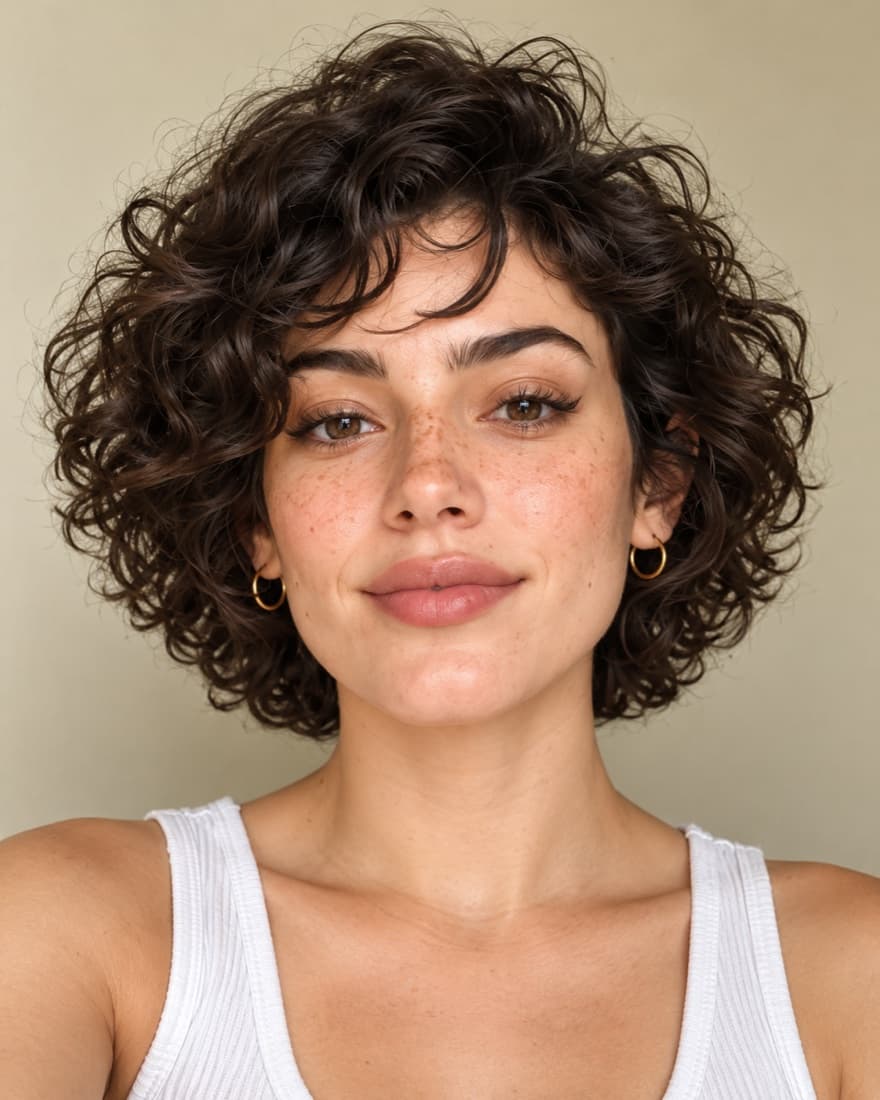
What glasses suit my face shape?
Choose frames that contrast with your face. Round faces suit angular frames such as rectangles. Square faces suit round or oval frames that soften the jaw. Oval faces suit almost anything, particularly frames about as wide as the cheekbones. Heart faces suit light, bottom-heavy frames, rimless or thin metal. Oblong faces suit deep, wide frames with decorative temples. Diamond faces suit cat-eye, oval and rimless frames that echo the cheekbones. A triangle tendency, where the jaw is at least 1.06 times the brow width, suits browline and cat-eye frames with a heavier top. Check the fit too: the frame should be about as wide as your face at the cheekbones, with your pupils near the middle of each lens. Our detector names one of six shapes, and in our reference set of 1,196 faces oval was the most common at 52%.
- Rule: contrast the face’s dominant lines
- Frame width ≈ face width at the cheekbones
- Six shapes + a triangle tendency (jaw ≥ 1.06 × brow)
- Oval 52% of 1,196 reference faces
How to use it
- Upload a selfie or take one: a front-facing, well-lit photo of yourself, no glasses, neutral expression.
- Wait a few seconds: the face model finds 68 landmarks in your browser; the photo is not uploaded.
- Read your face shape and the three ratios behind it.
- Scroll to the haircuts and glasses that suit that shape.
Pair your frames with the rest
Glasses by face shape: the quick table
Use the shape the detector gives you, or the closest from your mirror. Each row names the frames to try, the ones to be careful with, and why the contrast works.
| Face shape | Best frames | Be careful with | Why |
|---|---|---|---|
| Round | Rectangle, square, angular cat-eye, browline | Small round frames | Angles add structure to soft curves |
| Oval | Most styles; aviator, square, geometric, round | Frames far wider or narrower than the face | Balanced proportions need no correction |
| Square | Round, oval, rimless, thin metal | Boxy, thick, angular frames | Curves soften a strong jaw |
| Heart | Bottom-heavy, rimless, thin metal, aviators, round | Heavy top bars and decorative upper rims | Visual weight moves down to balance a wide brow |
| Oblong | Oversized, deep, wide squares and rounds; decorative temples | Small, narrow, shallow frames | Depth and width shorten the face |
| Diamond | Cat-eye, oval, rimless, browline | Narrow frames that sit at the cheekbones | Curves and detail on the brow balance the cheeks |
| Triangle tendency | Browline, cat-eye, frames with a heavier or detailed top | Heavy lower rims, wide bottoms | Weight at the top balances a wider jaw |
How to find your face shape first
Frames are chosen by contrast, so the shape matters. The detector above uses 68 landmarks on your face in your browser. It compares your face length with your cheekbone width, then your jaw and brow widths with your cheekbone width, and checks your jaw angle. Oblong is a length-to-width ratio of 1.53 or more. Square is a jaw at least 0.833 of the cheekbone width with an angle of 145° or less. Round is a length-to-width ratio of 1.38 or less with a wide jaw. Heart and diamond come from the brow and jaw ratios. Everything else is oval.
There is no triangle class in the detector. If your jaw is at least 6% wider than your brow line, which we call a triangle tendency, the result still shows the nearest of the six, with the ratios beside it. In our reference set of 1,196 faces, 9.9% showed this pattern: 16.4% of men and 2% of women. The advice for that row in the table applies to you whatever label you received.
| Shape | Share of 1,196 reference faces | Women | Men |
|---|---|---|---|
| Oval | 52% | 50.6% | 53.4% |
| Oblong | 16.5% | 22% | 11.6% |
| Round | 10.5% | 5.4% | 14.7% |
| Heart | 8.9% | 16.1% | 2.8% |
| Square | 8.4% | 4.8% | 11.3% |
| Diamond | 3.8% | 1.1% | 6.2% |
How to check that glasses actually fit
A frame can suit your shape and still look wrong if the size is off. Four checks decide the fit:
- Frame width: the frame should be about as wide as your face at the cheekbones. If your cheeks bulge past the frame, it is too narrow; if the frame sticks out past your temples by a lot, it is too wide. Sunglasses are more forgiving.
- Bridge: the bridge should sit on your nose without sliding or pinching. Wide-set eyes suit a bridge with some width and a darker colour; close-set eyes suit a lighter, clear bridge. The eye spacing label in your analysis (wide-set, balanced or close-set) is a hint here.
- Brow line: the top of the frame should follow, not cover, your eyebrows. A top bar above the brow hides the arch; a frame that sits just under it frames the eye. The brow shape guide explains how to match the arch to the frame.
- Eye position: your pupils should sit near the middle of each lens, not at the edge.
Most frames print three numbers on the inside of the arm, such as 52-18-140. They are lens width, bridge width and arm length in millimetres. If you own a pair that fits well, use its numbers as your starting point when shopping online.
Round, square and oval faces
Round faces are about as long as they are wide with soft angles. Rectangular and angular frames add structure; thin, very small round frames can make the face look rounder. Choose frames that are wider than they are deep.
Square faces have a wide jaw with clear corners. Round, oval and rimless frames soften it; a thick, boxy frame repeats the angles. The detector reads square from the jaw angle, so a jaw angle of 145° or less with a wide jaw points here.
Oval faces are balanced, so nearly every style works. The main rule is to keep the frame in proportion: about the width of the face, and not so deep that it covers the cheeks. This is the shape for experiments: try a bold colour or an unusual shape.
Heart, oblong and diamond faces
Heart faces are widest at the forehead and narrow at the chin. Light frames, such as rimless, thin metal or aviators, keep the focus on the eyes; a heavy top bar adds to the width of the forehead. Round or bottom-heavy frames balance the chin.
Oblong faces are noticeably longer than wide. Deep frames that cover more of the face vertically, wide frames and decorative temples all shorten the look. Avoid small, narrow lenses that sit like a thin strip across a long face.
Diamond faces are widest across the cheekbones. Cat-eye frames, ovals and rimless styles echo or soften the cheek line. Avoid frames that are narrower than the cheekbones, since they emphasize them.
Triangle (pear) tendency and other special cases
When the jaw is wider than the brow line, add visual weight at the top. Browline frames, cat-eyes and frames with colour or detail on the upper rim all do this, and a light or rimless lower edge keeps the jaw from looking heavier.
Strong prescriptions change the look of the frame. Thick lenses are easier to hide in a smaller, rounder, thicker frame, while a large frame shows the edge of a strong lens. If your prescription is strong, start with the optician’s advice and use the shape table for the style.
None of this is a rule you have to follow. A face shape suggests which frames balance your features, but personal style, hair colour and skin tone matter more than geometry. Try several pairs in a mirror.
Frequently asked questions
What glasses suit my face shape?
Pick frames that contrast with your face: angular for round, curved for square, deep and wide for oblong, bottom-heavy for heart, cat-eye for diamond. Oval faces suit most styles.
What are the best glasses for a round face?
Rectangular, square or angular frames, and browlines. Avoid small round frames.
What are the best glasses for an oval face?
Almost any style. Keep the frame about as wide as the cheekbones and not too deep.
What are the best glasses for a square face?
Round, oval or rimless frames in thin metal or lightweight acetate. Avoid thick, boxy frames.
How do I check frame width?
The frame should be about as wide as your face at the cheekbones, with your pupils near the middle of each lens. Use the numbers printed on the arm, such as 52-18-140, to compare.
Is my photo uploaded?
Not for local lookalikes or face analysis: the model runs in your browser, so your selfie, landmarks and descriptor stay on your device. AI portraits, including the first free one, and full reports send your photo through our server to the AI provider after a free first-portrait request or a credit purchase, and separate upload consent. Reports also send your numeric measurements. FaceTwin does not save the original photo; it is discarded from request memory after processing.
Does the tool let me try glasses on?
No. FaceTwin tells you which frame shapes suit your measurements but does not draw glasses on your photo.
More from the same selfie
Related by topic
Hairstyles by face shape
- Hairstyles for oval faces
- Hairstyles for round faces
- Hairstyles for square faces
- Hairstyles for heart-shaped faces
- AI hairstyle try-on
- French bob try-on
- AI outfit try-on
- Face shape detector
- Face shape + hairstyles
- Hairstyles for oblong faces
- Hairstyles for diamond faces
- Hairstyles for triangle faces
- Eyebrow shape for face shape
- Gemini AI hairstyle
- AI hair color changer
The data behind the scores: FaceTwin facts · face shape statistics
Last updated 2026-10-18. FaceTwin is for entertainment and is not identity recognition, medical or cosmetic advice.